Imbolc — Tending the First Light

Imbolc — Tending the First Light

Imbolc — Tending the First Light

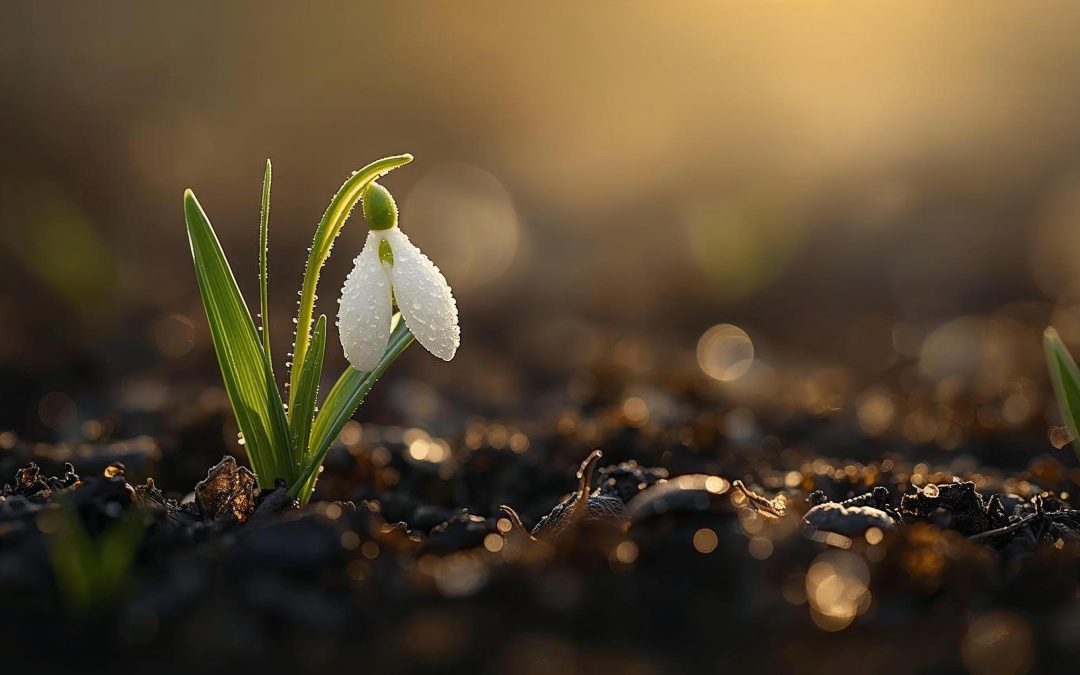
Imbolc arrives quietly.

Not with the certainty of spring,
not with visible results,
but with a subtle shift we can feel before we can explain it.

The days are still cold.
The earth still rests.
And yet — something inside us begins to stir.

This is the season of almost.
Almost ready.
Almost awake.
Almost brave enough to believe.

Imbolc in the Wheel of the Year

In the old seasonal rhythm, Imbolc marks the halfway point between the deep stillness of winter and the outward movement of spring.

It is not a time of arrival.
It is a time of tending.

The light has returned enough to be felt —
but not enough to be trusted blindly.

Imbolc lives in the in-between.
And so do we.

Brigid and the Gentle Fire

Imbolc is often associated with Brigid — goddess of healing, poetry, hearth, and sacred fire.

Not the fire that conquers or consumes,
but the fire that warms, protects, and keeps watch.

Brigid does not rush growth.
She teaches us how to stay close to what is alive,
even when it is still fragile.

This is not the fire of ambition.
It is the fire of care.

When Inner Movement Meets Doubt

As Imbolc approaches, many of us feel a familiar tension.

Inside, there is energy.
Ideas. Longings. A desire to move forward.

And yet — there is hesitation.

We want to see results before we commit fully.
We want proof before we invest our hearts.
So we move carefully, halfway, holding back.

Not because we lack discipline —
but because doubt learned how to keep us safe.

For many people, this hesitation is not laziness or fear of failure.
It is a survival strategy formed long ago:

If I don’t hope too much, it won’t hurt as much if it doesn’t work.

Imbolc gently exposes this pattern — not to shame it, but to soften it.

If you’d like to explore this season more deeply, I wrote earlier about Imbolc as the courage to hope — the moment before anything truly begins to bloom.


Releasing the Need for Control

Imbolc does not ask us to control the outcome.

It asks us to tend the process.

Seeds underground do not know how spring will arrive.
They respond to warmth, moisture, and time.

They do not rush because they trust the season to change.

In the same way, this moment in our lives does not require certainty.
It requires presence.

We are not asked to believe blindly.
Only to show up honestly.

If this tension between trust and doubt feels familiar, you might find resonance in this reflection on letting go of control:
When Letting Go of Control Becomes Trust

Simple Ways to Honor Imbolc

Imbolc does not need elaborate rituals.

Its magic lives in small gestures:

  • Lighting a candle with intention, not expectation
  • Opening a window to let fresh air in
  • Making a warm drink and drinking it slowly
  • Writing a single question in your journal:
    • What is already alive in me?
    • What am I gently tending right now?

These acts are not preparation for life.
They are life.

The Courage of Quiet Hope

Imbolc teaches us that hope does not shout.

It hums softly.
It flickers.
It waits.

And sometimes the bravest thing we can do is continue tending something we cannot yet prove will grow.

The light is not asking you to hurry.
It is asking you to stay.

A Mantra for Imbolc

You may return to this mantra during the day, or hold it gently during meditation:

I tend what is alive in me.
I do not need proof to care.
I trust the season to change.

Let it be a reminder that presence is already an act of faith.

Explore more soulful reads

More stories to nurture your spirit.

Tending the Flame — Gentle Habits, Quiet Hope, and the Courage to Stay

Tending the Flame — Gentle Habits, Quiet Hope, and the Courage to Stay

Tending the Flame

Gentle Habits, Quiet Hope, and the Courage to Stay

Imbolc does not arrive with answers.
It arrives with a small flame — fragile, steady, and asking to be tended rather than forced.

Three weeks have passed since the beginning of the year.
For many of us, this is the moment when good intentions begin to meet reality.
Some habits feel supportive. Others falter. Resistance appears. Motivation shifts.

Imbolc does not ask us to judge any of this.
It asks us to notice.

The Courage to Begin Without Certainty

Hope is often misunderstood as optimism — as confidence that everything will work out.
But Imbolc teaches a different kind of hope.

This is hope before evidence.
Hope that exists even when outcomes are unclear.
Hope that does not rely on results, but on trust.

In this season, faith is not loud or triumphant.
It is quiet. It is patient. It is willing to stay.

Gentle Habits as Repeated Gestures of Care

Imbolc is not about dramatic change.
It is about repeated gestures — small acts of attention that return us to ourselves again and again.

A few minutes of meditation, even when the mind is restless.
The same cup of tea each morning.
A candle lit at the end of the day, not to mark progress, but to mark presence.

The gesture is not about doing it “well.”
The gesture is about returning.

Each return tells the nervous system:
You are safe. You are not being rushed.

Meeting Resistance With Curiosity, Not Force

As habits begin to form, resistance often follows.
This is not failure — it is information.

Imbolc invites us to ask gentle questions instead of issuing demands:

  • Can I accept where I am right now?
  • Can I stay present even when something feels difficult?
  • Can I allow resistance to exist without needing to overcome it?

This echoes an earlier reflection on acceptance — the understanding that acceptance is not resignation, but relationship.
To accept is to remain in contact, not to give up.

Patience Grows From Safety

True patience cannot be forced.
It grows naturally when we feel safe enough to trust the process.

Survival mode is always result-oriented.
It wants completion, certainty, relief.

Imbolc offers another way:
to rest in the middle,
to soften urgency,
to let change unfold without pressure.

In the natural world, nothing is rushed at this time of year.
Seeds remain hidden. Sap rises quietly. Ice melts slowly.

Growth begins long before it can be seen.

A Loving Teacher, Not a Taskmaster

In many earth-based traditions, this gentle wisdom has long been held by feminine archetypes — by goddesses who teach through care rather than command.

Imbolc carries this maternal quality.
It does not demand transformation.
It creates the conditions for it.

Like a patient, attentive presence, it reminds us that consistency does not require force — only devotion.

Staying With the Flame

Imbolc does not ask us to do more.
It asks us to stay.

To tend what is small.
To return without judgment.
To trust that what is warming beneath the surface will emerge in its own time.

This is not a season of proof.
It is a season of care.

And sometimes, that is the bravest work of all.

Explore more soulful reads

More stories to nurture your spirit.

Imbolc Is Not Spring — It Is the Courage of Hope

Imbolc Is Not Spring — It Is the Courage of Hope

Imbolc Is Not Spring — It Is the Courage of Hope

In this Imbolc reflection, patience becomes an act of trust rather than waiting for certainty.

Imbolc arrives quietly.

There is still cold in the ground.
The days are longer, but winter has not released its grip.
Nothing is blooming yet — and still, something has shifted.

Imbolc is often misunderstood as the beginning of spring, but it is not.
It is not about results, growth, or visible change.

Imbolc is about hope before proof.
And that takes courage.

When Faith Is Needed Most

There are seasons in life when faith is not optional — because certainty is not yet available.

The outcome is still unknown.
The intention has been set, but the evidence has not arrived.
The path feels chosen, but untested.

This is when trust matters most.

Not the loud kind of faith that declares everything will be fine,
but the quiet kind that says: I will stay with this, even when I don’t yet know how it ends.

Imbolc teaches us that faith is not naïve optimism.
It is inner steadiness in the absence of reassurance.

Learning to Walk Without Forcing the Path

Survival mode is often project-oriented.

It wants timelines, milestones, and conclusions.
It asks, When will this be over?
It stays hyper-alert, scanning for danger, pushing for resolution.

That way of being once kept us safe — and we can honor that.

But Imbolc invites something different.

It asks us to loosen the grip of urgency.
To release the belief that everything must be managed, fixed, or completed as quickly as possible.

This is not passivity.
It is patience born from safety.

True patience only emerges when we begin to trust the process itself — when we no longer feel that pausing will cause everything to collapse.

The Wisdom of the Natural Cycle

Nature does not rush Imbolc.

Seeds remain hidden beneath frozen soil.
Sap begins to rise long before buds appear.
Life prepares itself quietly, without performance.

This is the loving lesson of the season:
nothing meaningful is forced.

In many earth-based traditions, this wisdom has long been held by feminine archetypes — by goddesses who embody care rather than command, rhythm rather than control.

They do not demand growth.
They create the conditions for it.

Imbolc carries the energy of the patient, nurturing mother — the one who tends the fire, warms what is fragile, and waits without anxiety for life to unfold in its own time.

This way of understanding life — as something that teaches through rhythm rather than force — is also present in many goddess traditions, where wisdom is offered through presence, not command.

When Letting Go of Control Becomes Trust

Trusting the Path Before the Proof

This season reminds us that there is no such thing as a purely good or purely bad phase in life.

There are only experiences — and our relationship to them.

When we learn to trust the direction we have chosen, even before it bears fruit, we begin to relate to life differently.
Not as something to conquer, but as something to learn from.

This shift does not come from effort.
It comes from softening.

If you wish to explore this theme more deeply, you may find resonance in the earlier reflection, When Letting Go of Control Becomes Trust, which speaks to the courage it takes to release the illusion of control and rest in something greater than fear.

Imbolc as a Gentle Teacher

Imbolc does not shout its lessons.

It teaches by example — by showing us how life prepares without rushing, how growth begins invisibly, and how care precedes change.

It reminds us that we are allowed to:

  • move slowly
  • trust without certainty
  • remain open even when nothing is guaranteed

This is not weakness.
This is wisdom.

Imbolc is not the answer.
It is the space where answers are kept warm until they are ready.

And that, too, is a form of love.

Explore more soulful reads

More stories to nurture your spirit.

Pin It on Pinterest