



Gifts for the Witch at Heart: A Christmas Gift Guide

Gifts for the Witch at Heart: A Christmas Gift Guide

THE CHRISTMAS GIFT EDIT


Gifts for the Witch at Heart

Moonlit Botanicals

Personalized treasures for the moon lover, the nature soul, and the woman who finds a little magic in everyday life.

Explore the Full Collection

For the Person Who Notices the Moon

Looking for Christmas gifts for the witch at heart? Perhaps your sister loves moonlit skies, your mother finds peace in her garden, or your closest friend fills her home with books, botanicals, and beautiful little rituals.

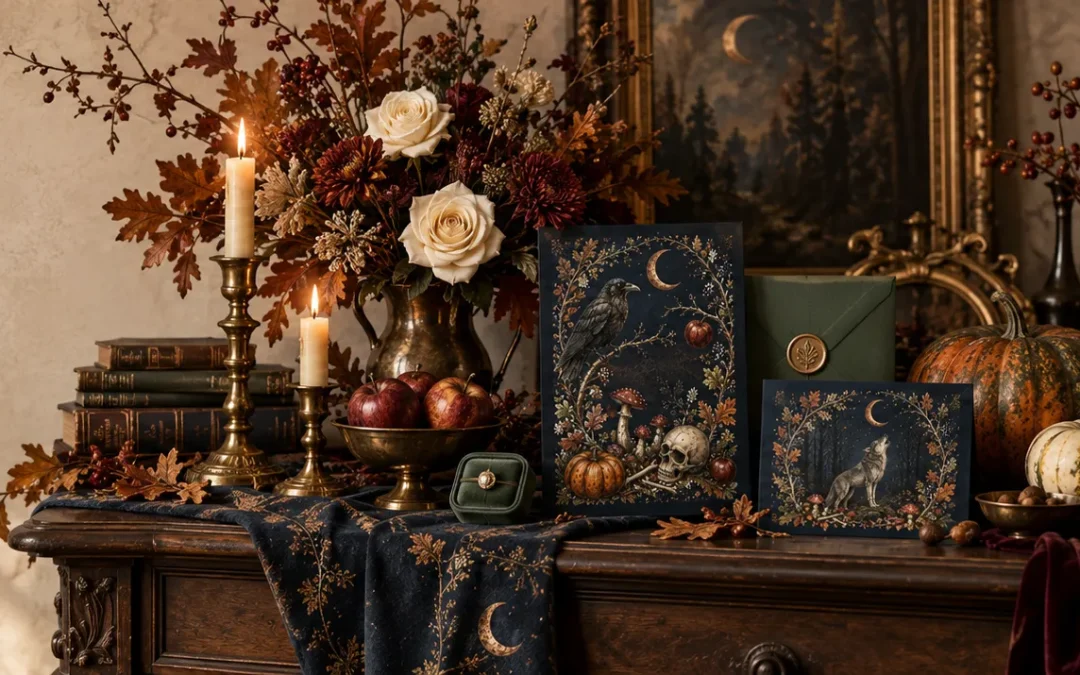
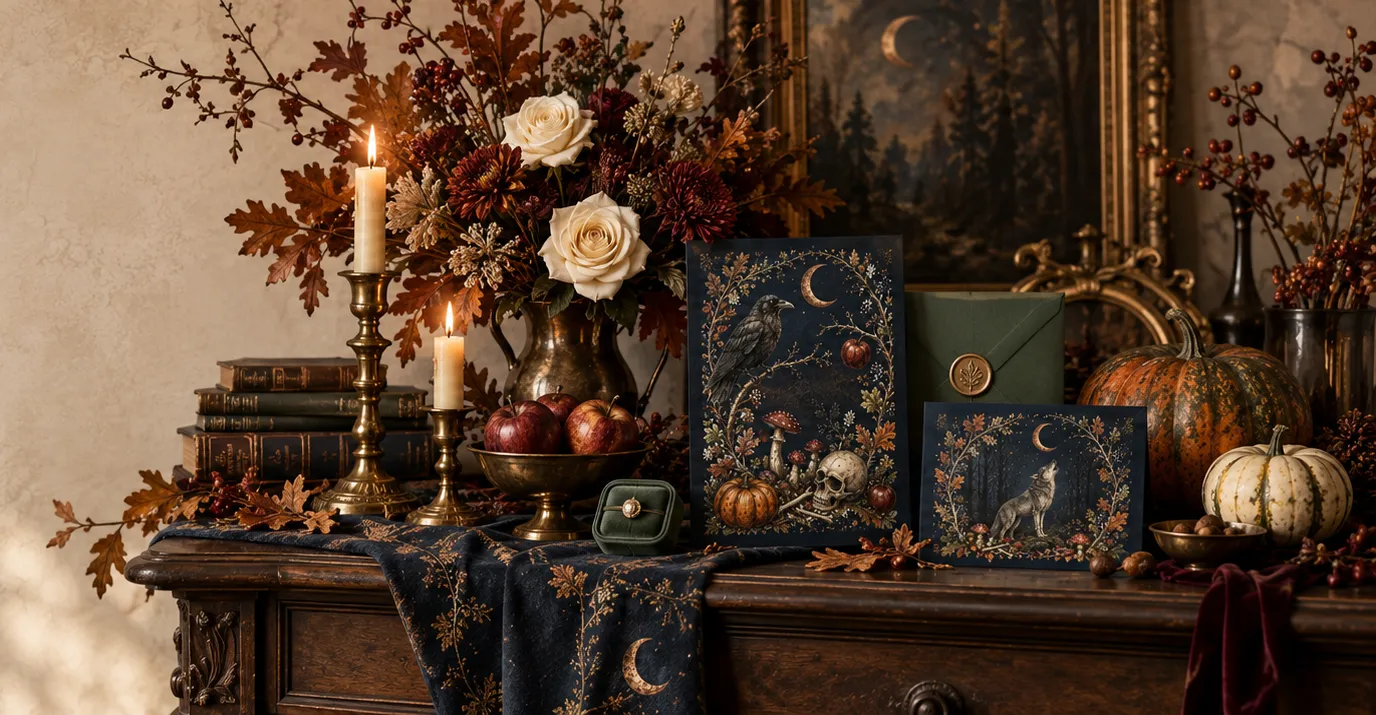
A thoughtful gift can feel like a reflection of her world. Moonlit Botanicals brings together crescent moons, golden moths, and delicate foliage in forest green and antique gold—with personalized details that make the giving feel more meaningful.

The Moonlit Palette

Forest Green · Antique Gold · Warm Ivory · Soft Black

A LITTLE MAGIC AT HOME

For Her Favorite Corner

A moon-and-moth pillow turns a favorite reading chair into a place to linger. Add her name for a personal touch she will see every day, surrounded by delicate botanicals and warm golden details.

Pair it with a book she has been meaning to read.

For Slow, Cozy Mornings

Her own Morning Magic mug, a favorite blend, and a quiet moment before the day begins. A small gift with a lovely everyday purpose—for winter mornings, afternoon tea, and one more chapter.

FOR THE DREAMER & THE GARDENER

Dream Journal

For nighttime notes, dreams, and reflections.
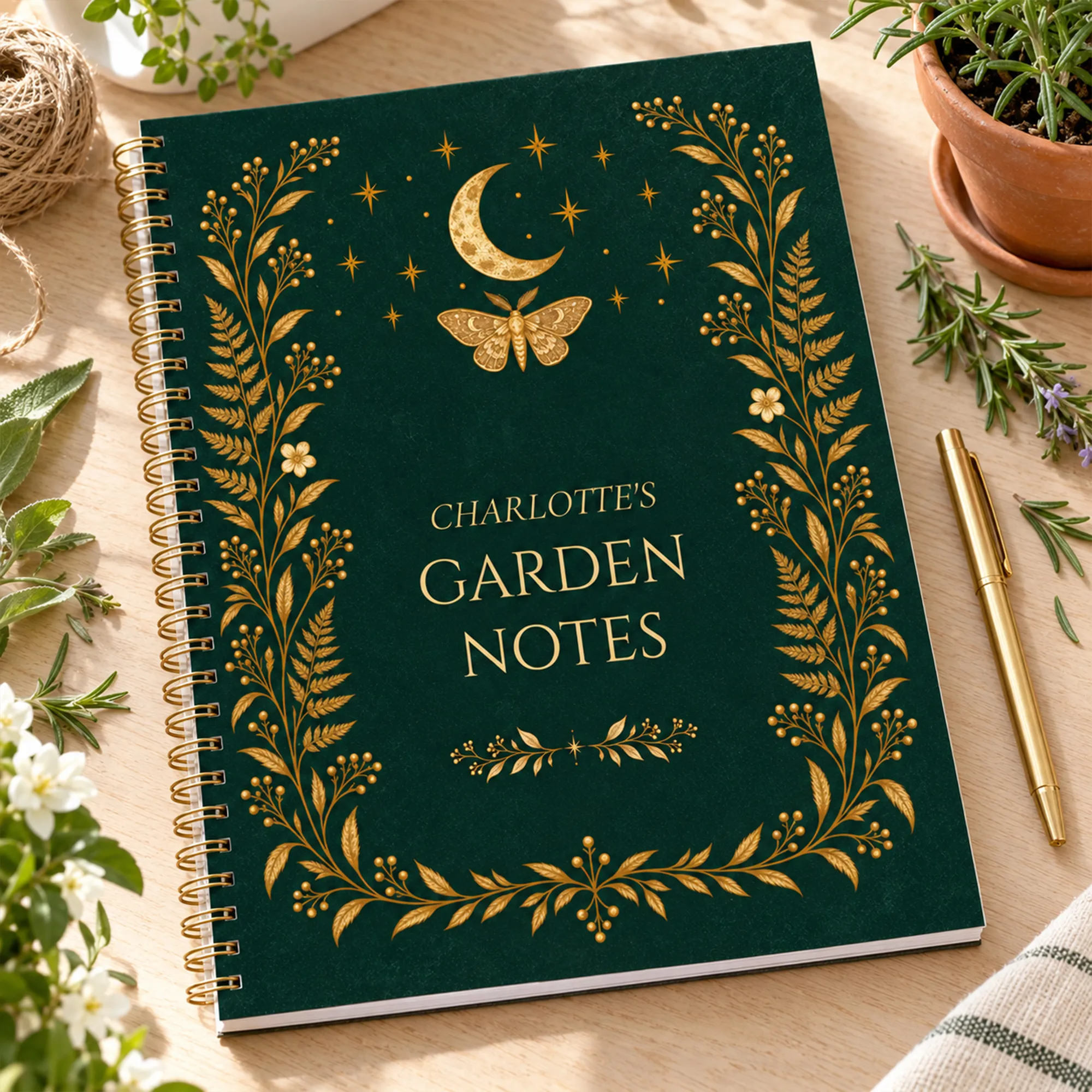
Garden Notes

For planting ideas, seasonal observations, and the little things she notices outdoors.

Magical Plans

For the plans and possibilities she wants to make room for.

EVERYDAY TREASURES

Take a Little Magic Along

A botanical tote for books, errands, and little finds.

Something Just for Her

A personalized zipper pouch for the essentials she likes to keep close.

A Touch of Moonlight

A moon-and-moth phone case that brings a little beauty to something she uses every day.

MAKE THE GIVING FEEL MAGICAL

A Gift Before It Is Opened

Forest green wrapping paper, botanical ribbon, and a handwritten note make even a small present feel considered.

Finish with a personalized ceramic ornament—a keepsake she can bring out each Christmas.

Choose the gift for her habits. Make it personal with her name.

FIND HER KIND OF MAGIC

A Little Magic, Just for Her

A cozy hoodie, a journal for her thoughts, and a favorite mug within reach. Sometimes the most thoughtful gifts simply belong in the moments she already loves.

Explore Moonlit Botanicals for personalized Christmas gifts for the witch at heart—from botanical accessories to comforting touches for her home.

PIN IT FOR LATER

For Your Christmas Gift List

Keep these thoughtful witchy gift ideas close when the season of giving arrives.

Explore more soulful reads

More stories to nurture your spirit.

Victorian Samhain Gathering Guide

Victorian Samhain Gathering Guide

PRACTICAL MAGIC · SEASONAL GATHERINGS


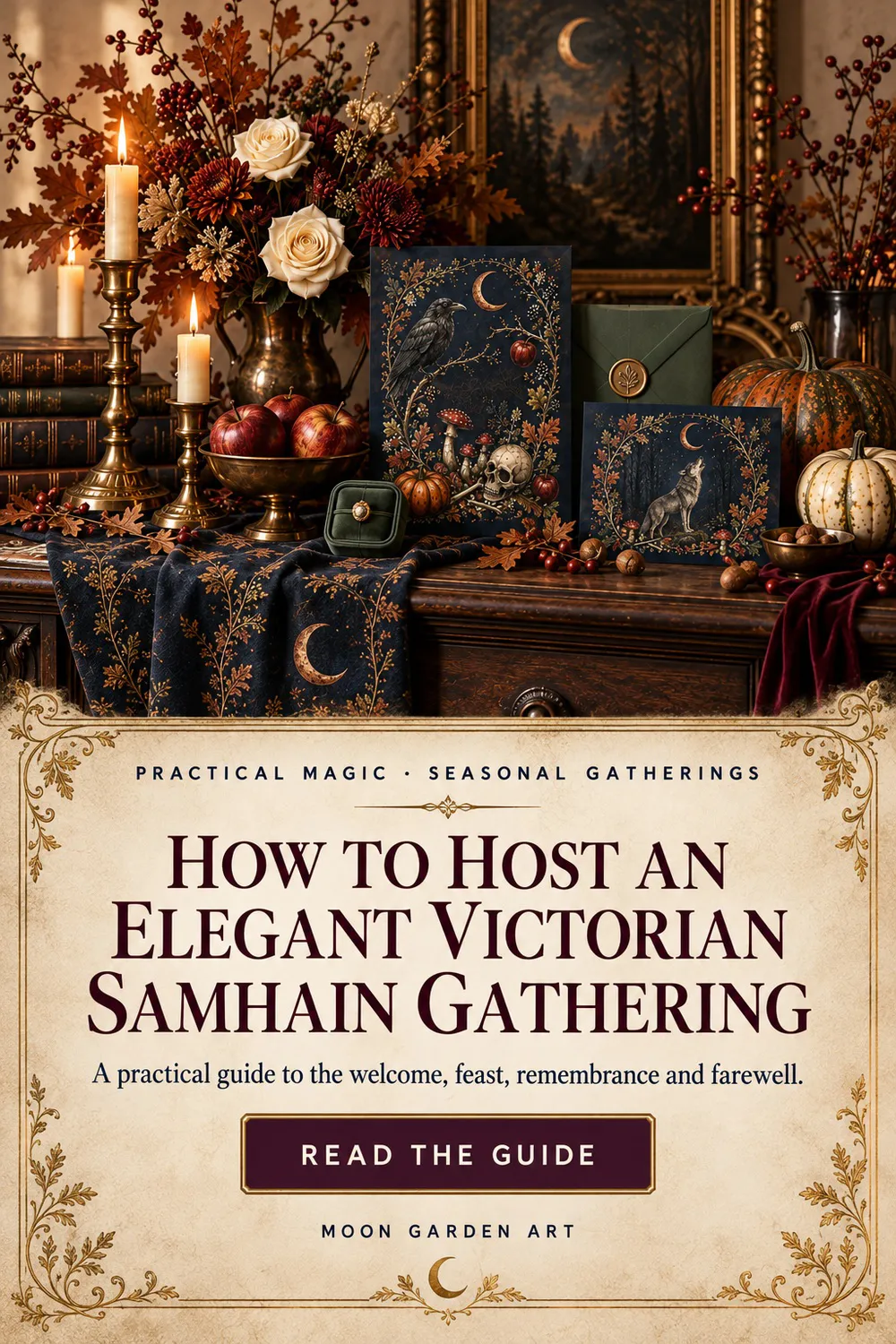
How to Host an Elegant Victorian Samhain Gathering

A practical guide to creating an evening that feels intentional, atmospheric and unmistakably Samhain—from the first invitation to the final farewell.


THE MOON GARDEN ART HOSTING GUIDE

THE SIMPLE FORMULA

Make it more than a beautiful dinner

A Samhain gathering becomes distinctive through four deliberate moments: a threshold, a seasonal feast, a space for remembrance and a meaningful farewell. You bring the guests and the food. The Victorian Samhain Gathering Collection brings every visual detail together.

01 · Threshold

Invite guests into another enchanted world.

02 · Feast

Make the season visible at the table.

03 · Remembrance

Create one quiet, meaningful ritual.

04 · Farewell

End with gratitude and a keepsake.

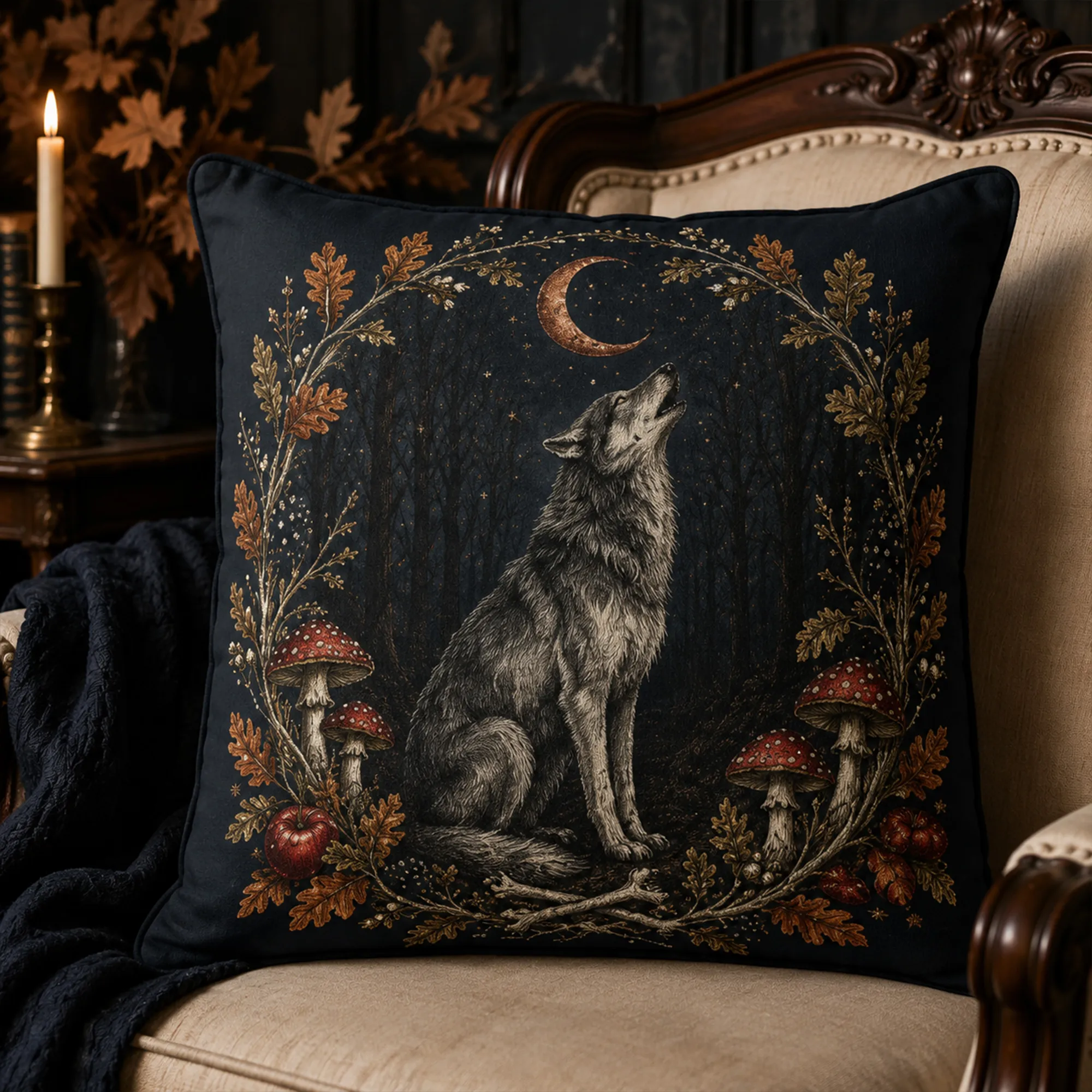
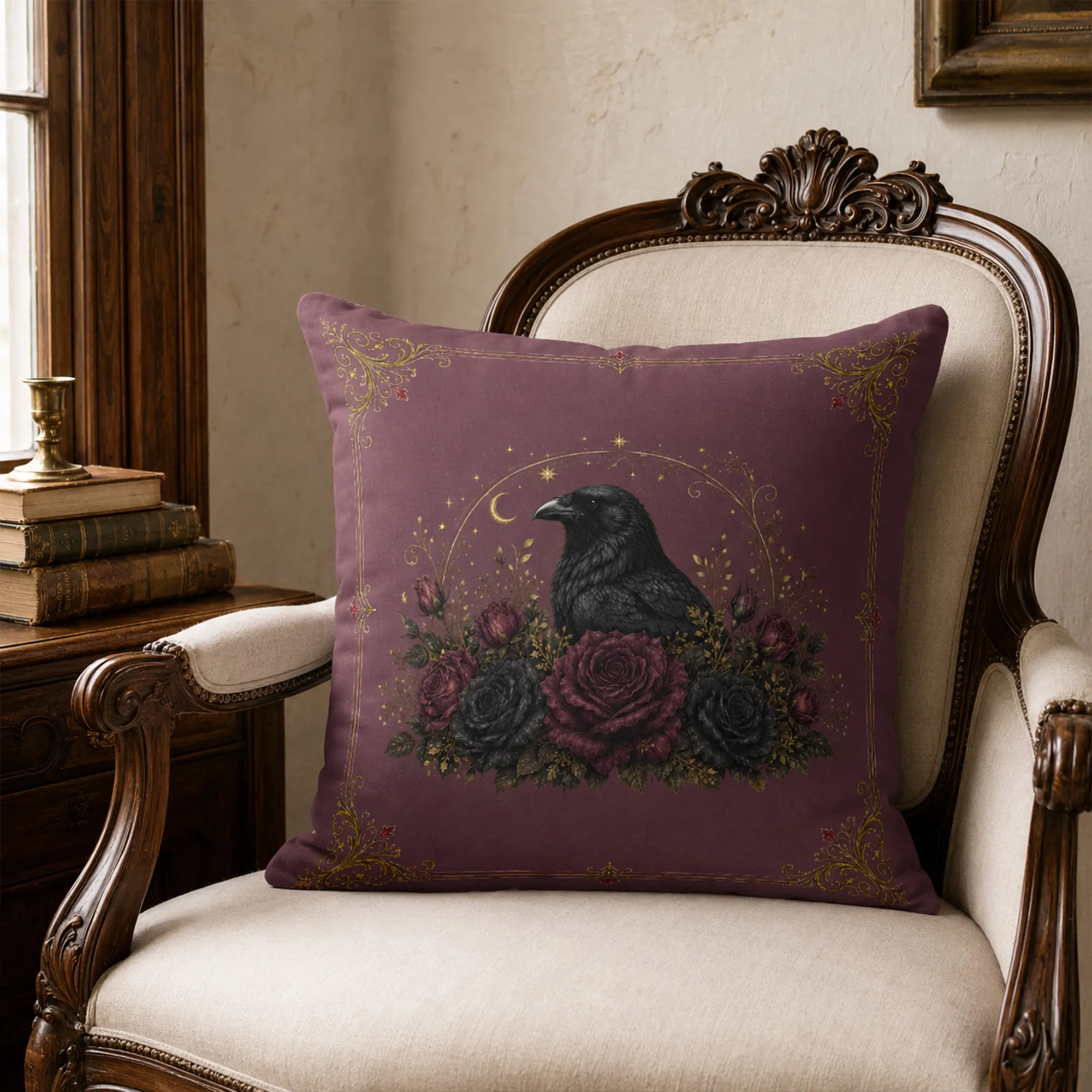
Antique plum raven floral pillow styled on a carved Victorian chair

BEGIN BEFORE THE EVENING

Set the expectation with the invitation.

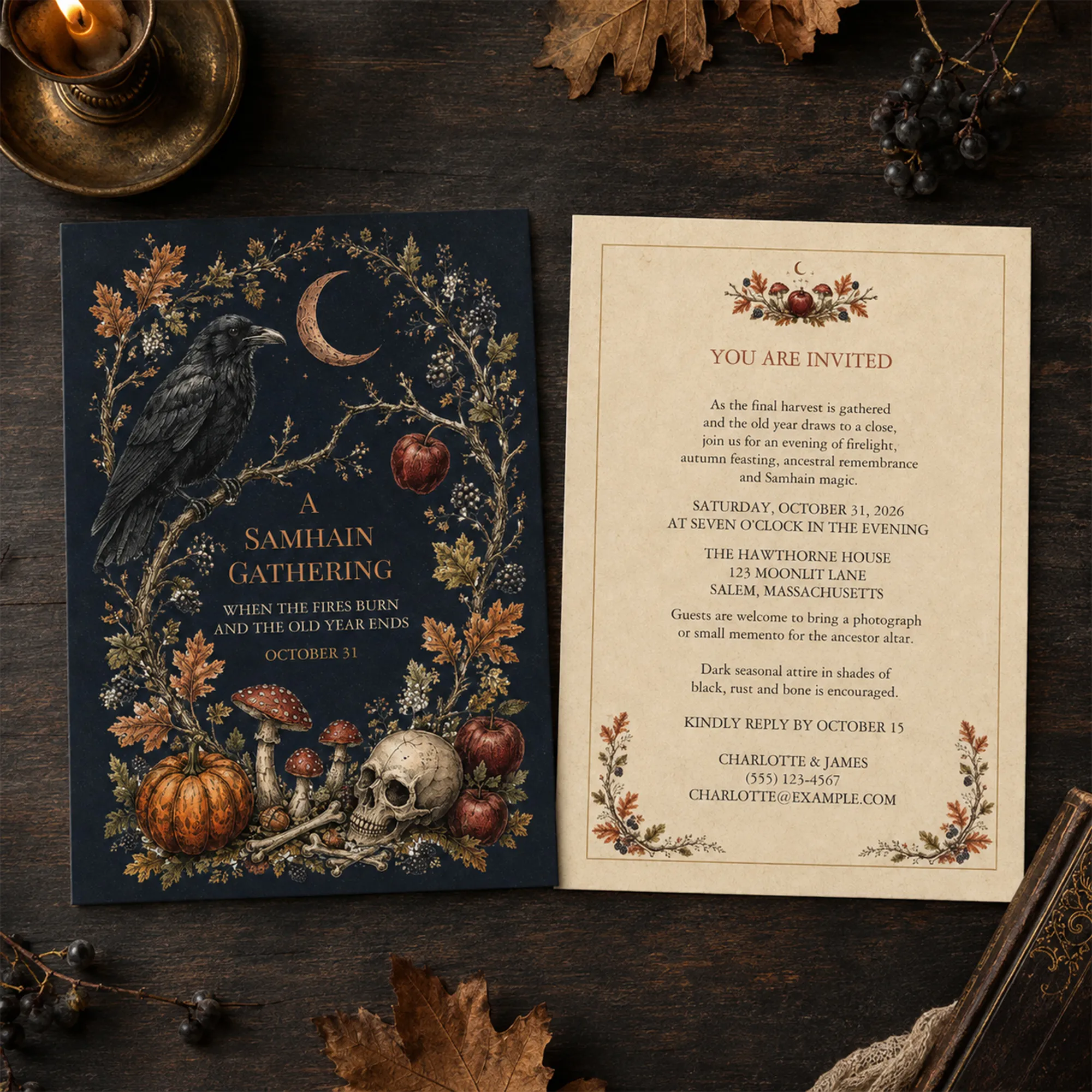
Your gathering starts the moment the invitation arrives. Give guests the practical details, then add one line that signals the mood: candlelit supper, Victorian-inspired dress, or an evening of feasting and remembrance.

  • Name the occasion clearly: a Samhain gathering.
  • Suggest a dark, autumnal or Victorian-inspired dress code.
  • Invite guests to bring a photograph, name or small memento for the remembrance table.

THE THREE-ZONE METHOD

Give every part of the evening a purpose.

You do not need to transform the entire home. Style three defined spaces and let the coordinated design carry the story from arrival to farewell.

THE THRESHOLD

Welcome

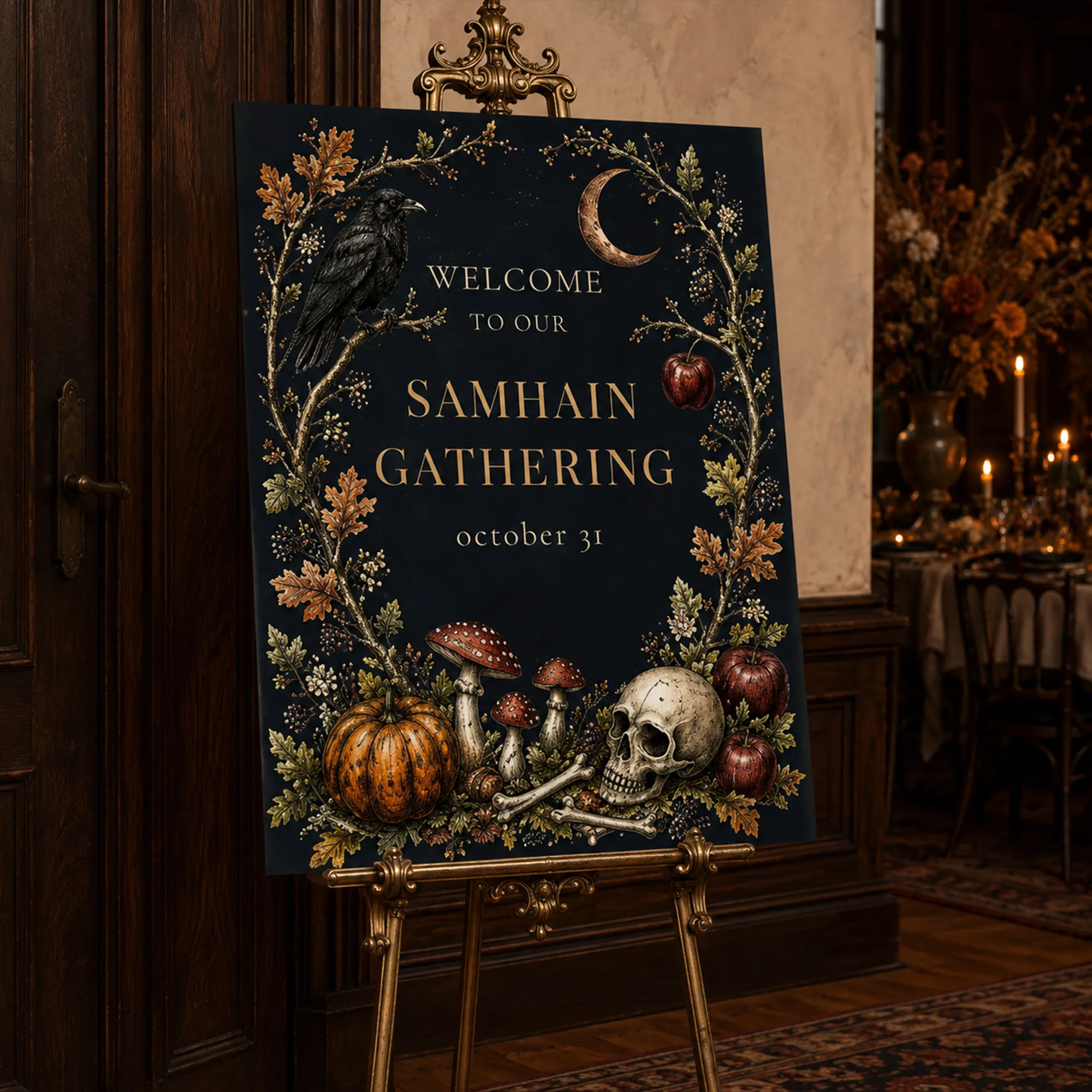
Place the welcome sign by the entrance with a lantern, fallen leaves or branches. This first detail immediately sets the mood.

THE SHARED TABLE

Feast

Repeat the same palette and motifs across the menu, napkins, place cards and food labels. The table immediately feels collected rather than improvised.

THE QUIET CORNER

Remember

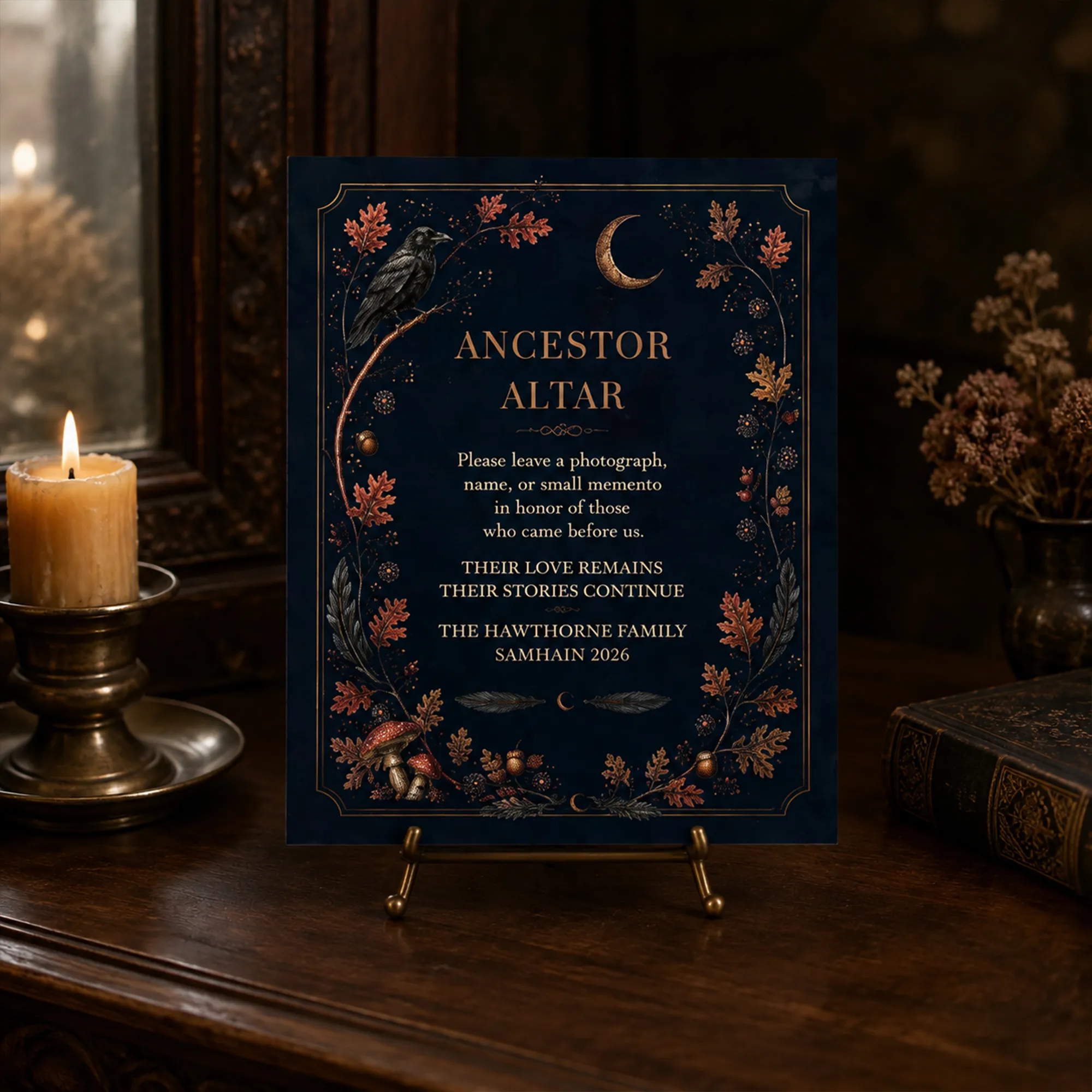
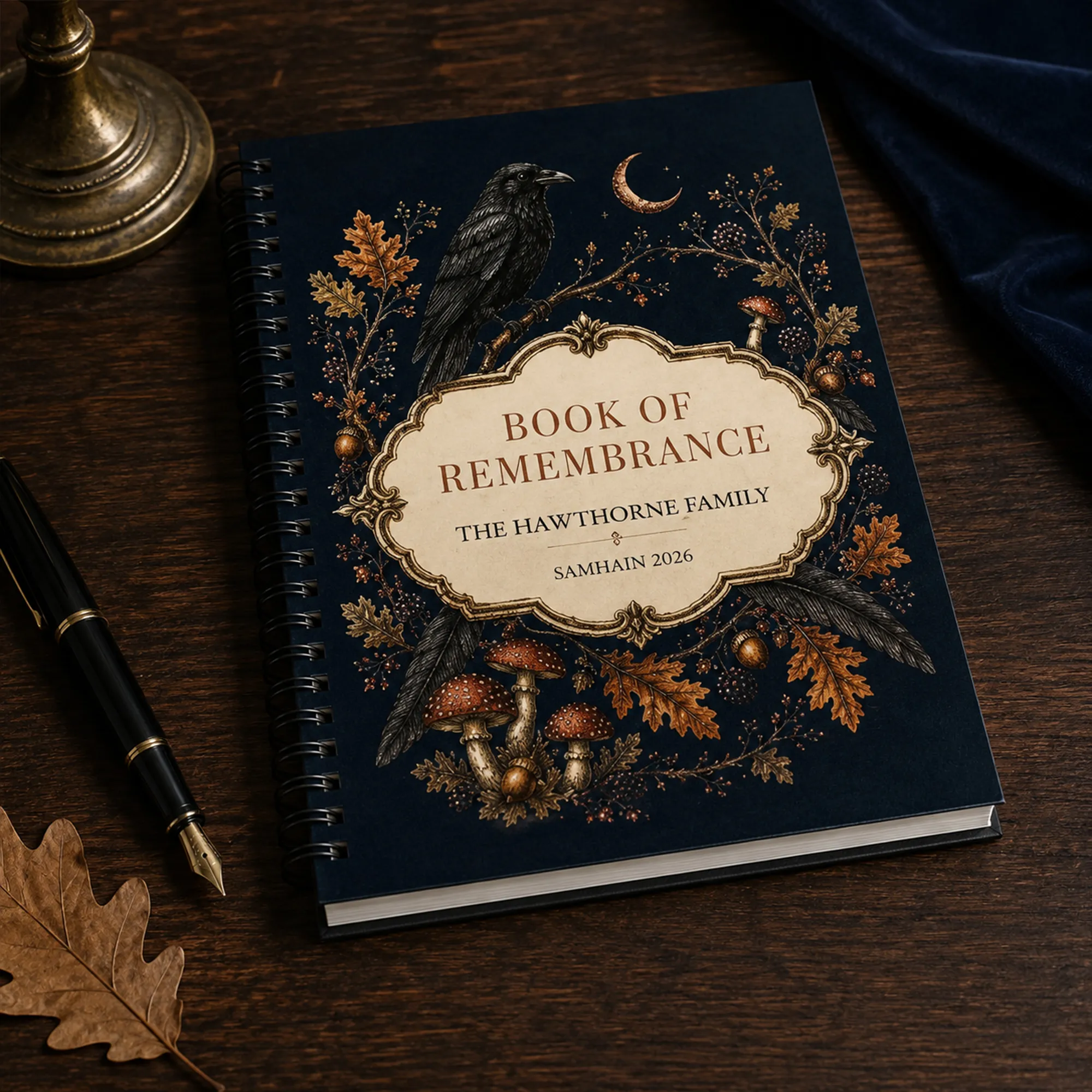
Use the ancestor altar sign to identify a small side table for photographs, keepsakes, candlelight and the Book of Remembrance.

PRACTICAL TABLE STYLING

Build a feast table that explains itself.

Let each printed or textile detail do a job. The result is elegant for guests—and easier for the host.

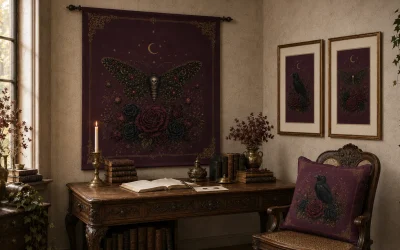
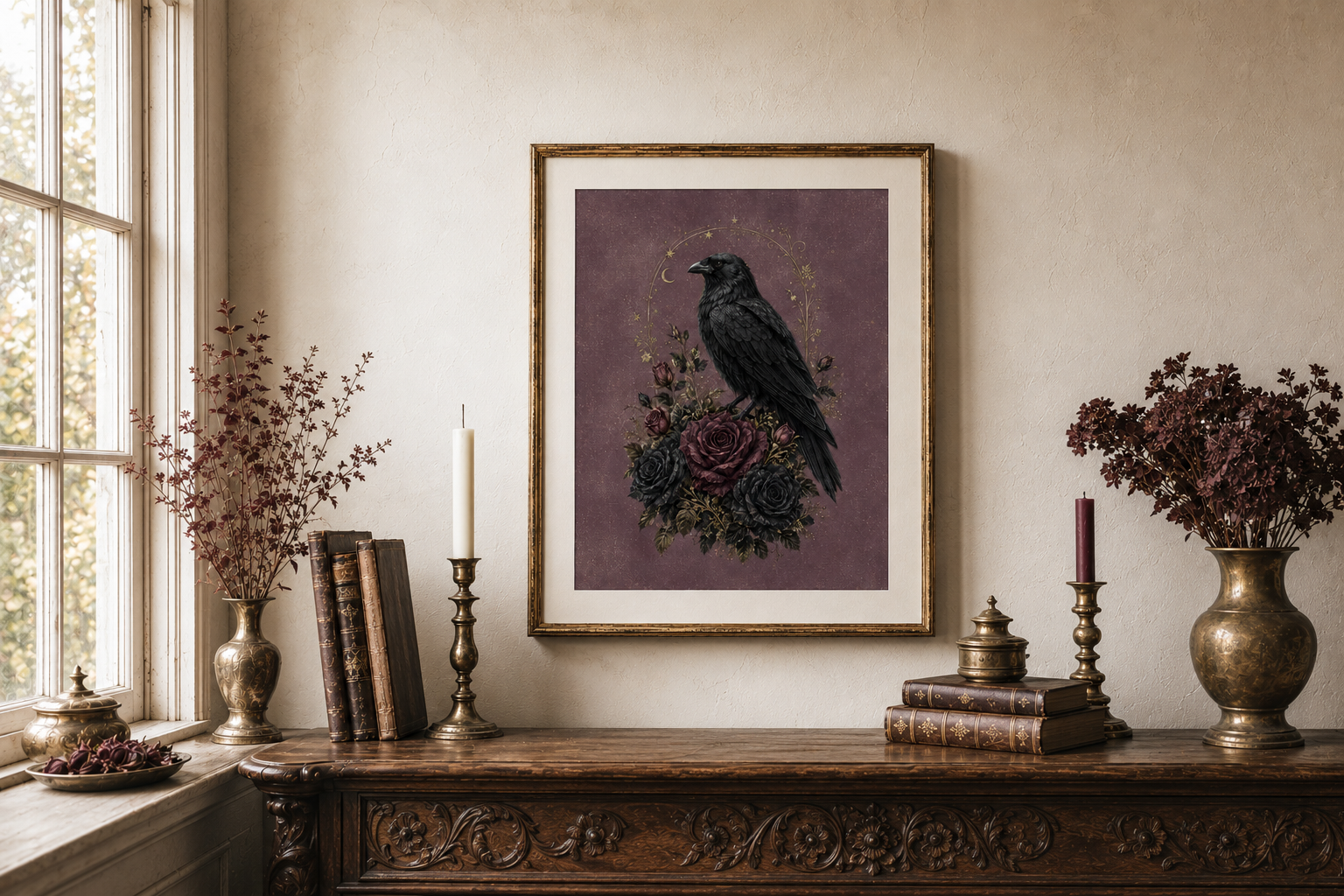
Antique plum raven floral wall art in a vintage brass frame above a dark wood desk

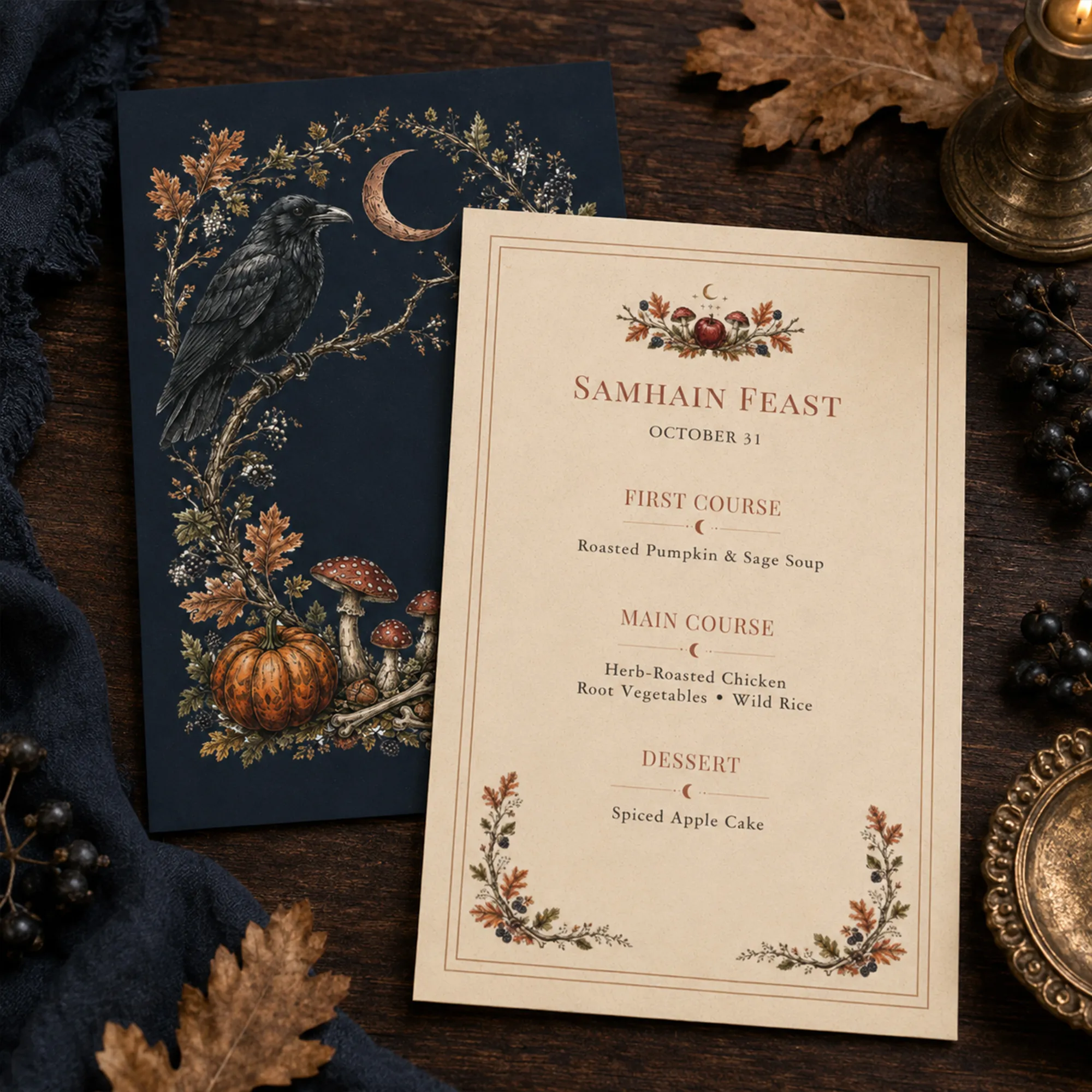
Start with the menu.

It introduces the feast, reinforces the theme and gives the place setting a strong visual center. Add brass candlesticks, dark glassware, seasonal fruit and natural foliage—then stop before the table becomes crowded.

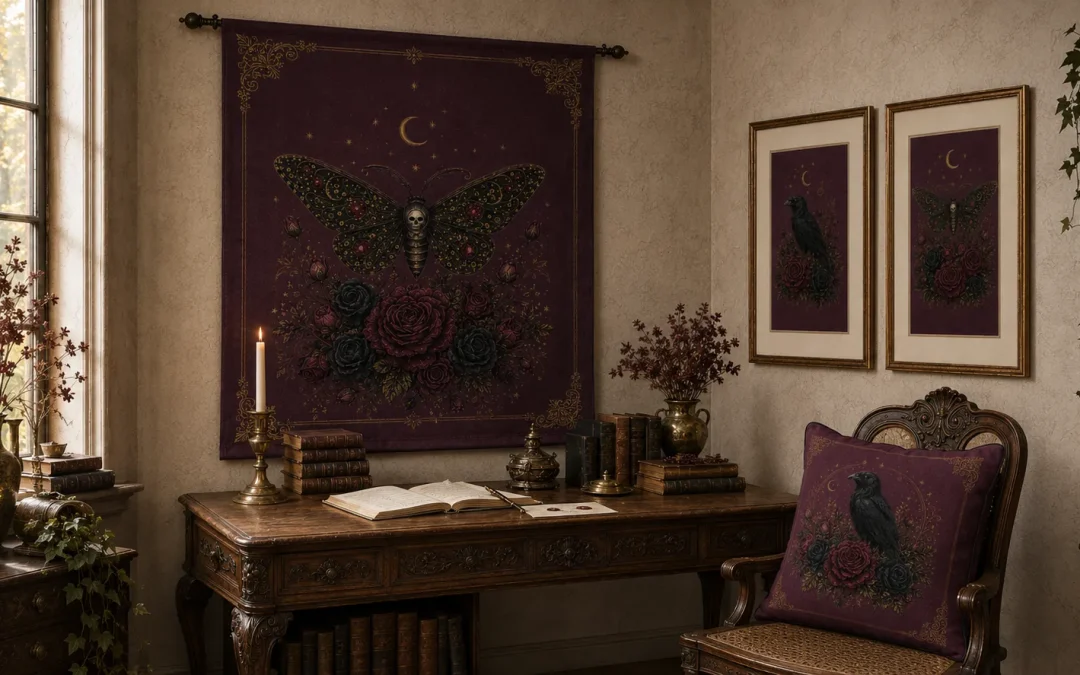
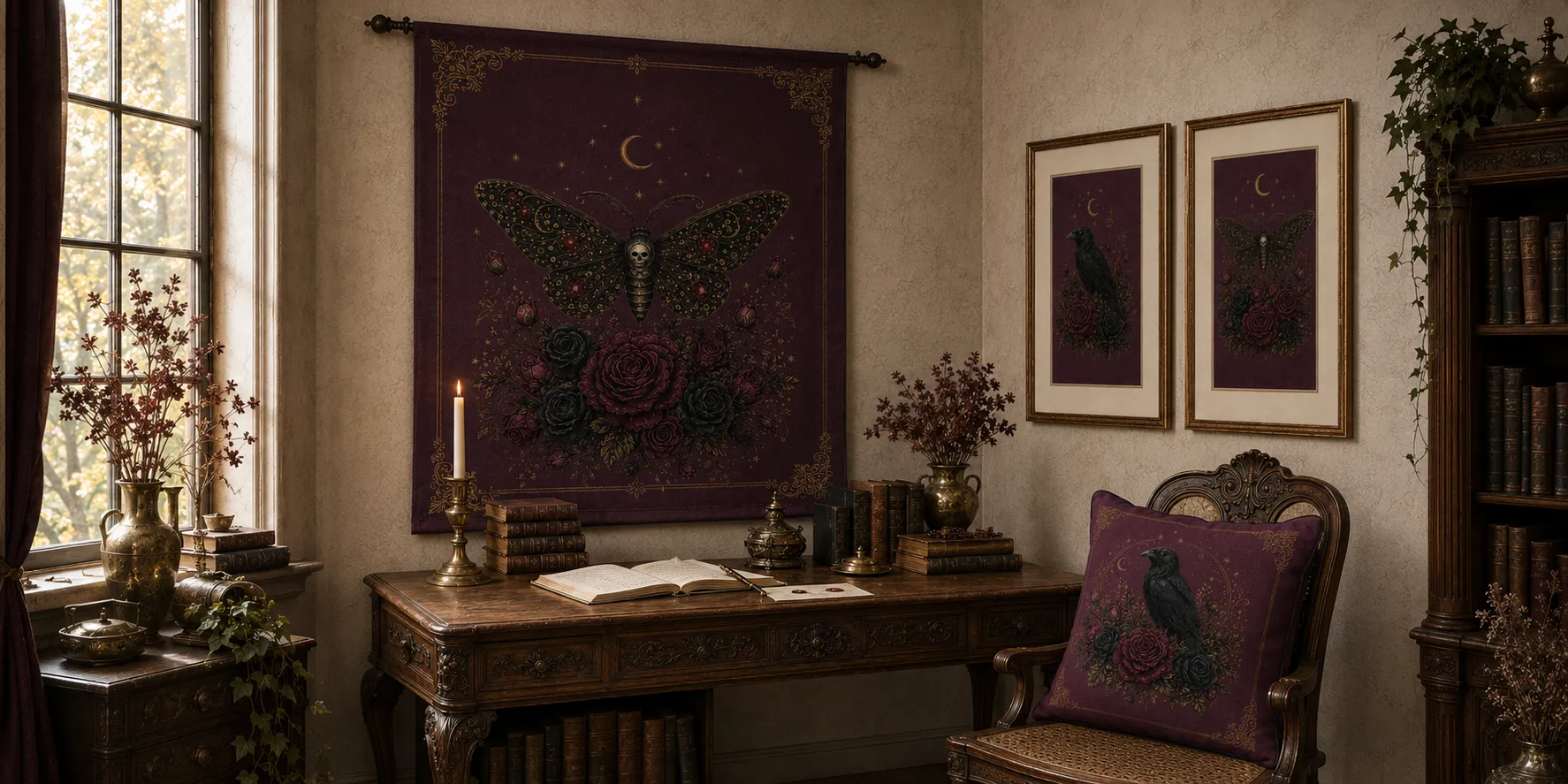
Antique plum raven floral wall art in a Victorian dark academia study corner

Cloth Napkin

Antique plum raven floral wall art in a Victorian dark academia study corner

Food Label

Antique plum raven floral wall art in a Victorian dark academia study corner

Place Card

Antique plum raven floral wall art in a Victorian dark academia study corner

Coaster

A NATURAL ORDER FOR THE EVENING

Keep the gathering gently structured.

A simple sequence creates momentum without making the evening feel formal or over-planned.

1

Arrival

Welcome drink, candlelight and time to notice the threshold.

2

Feast

Invite everyone to the table and introduce the seasonal menu.

3

Stories

Share memories naturally as the meal comes to a close.

4

Remembrance

Offer a short toast, a written memory or a quiet candle.

5

Farewell

Thank each guest and send them home with a small favor.

ONE MEANINGFUL RITUAL IS ENOUGH

Create a place for remembrance.

The ritual does not need to be elaborate. Make participation gentle and optional, then choose one simple action that suits your guests.

A quiet focal point

Gather photographs, names, flowers and keepsakes on a side table. Light a candle there before guests arrive.

A memory to keep

Invite guests to write a name, a short memory or a message in the Book of Remembrance during the evening.

ATMOSPHERE, NOT EXCESS

Layer warmth around the gathering.

Use low, warm light and repeat the collection’s palette in a few soft furnishings. Candlelight, aged brass, dark navy, woodland green and harvest rust create the Victorian mood without turning the room into a stage set.

Host’s Rule

Light the candles, lower the overhead lights and finish decorating before you dress. A calm host is part of the atmosphere.

THE FINAL GESTURE

Send guests home with a little piece of the evening.

A small favor makes the farewell feel considered. Tie it with coordinating ribbon, add a favor tag and place it by each setting or near the door.

Favor ideas:

  • Spiced tea
  • Herb sachet
  • Dark chocolate
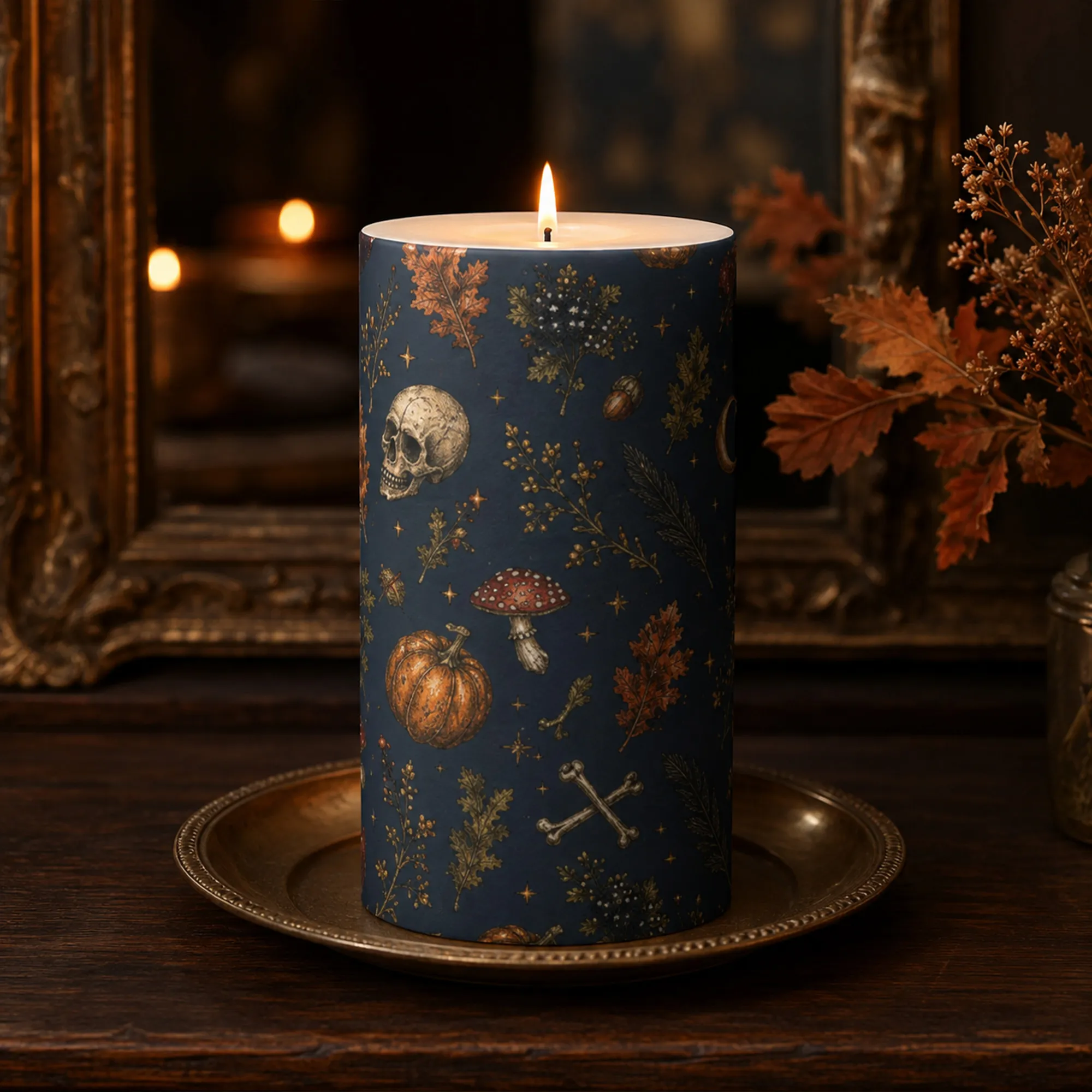
  • Small candle

Keep it simple: the thoughtful presentation is what connects the gift to the gathering.

ONE STORY · EVERY DETAIL

Shop the Victorian Samhain Gathering

Choose only the pieces your gathering needs, or build the complete experience from 23 coordinated designs—without searching across different styles and shops.

Featured pieces:

  • Invitation Suite
  • Welcome Sign
  • Feast Menu
  • Cloth Napkin
  • Ancestor Altar Sign
  • Favor Tag

SAVE THE COMPLETE GUIDE

Your gathering, beautifully connected.

Begin with the four moments—threshold, feast, remembrance and farewell—then select the coordinated pieces that make each moment effortless. The result will feel unmistakably Samhain and entirely your own.

Explore more soulful reads

More stories to nurture your spirit.

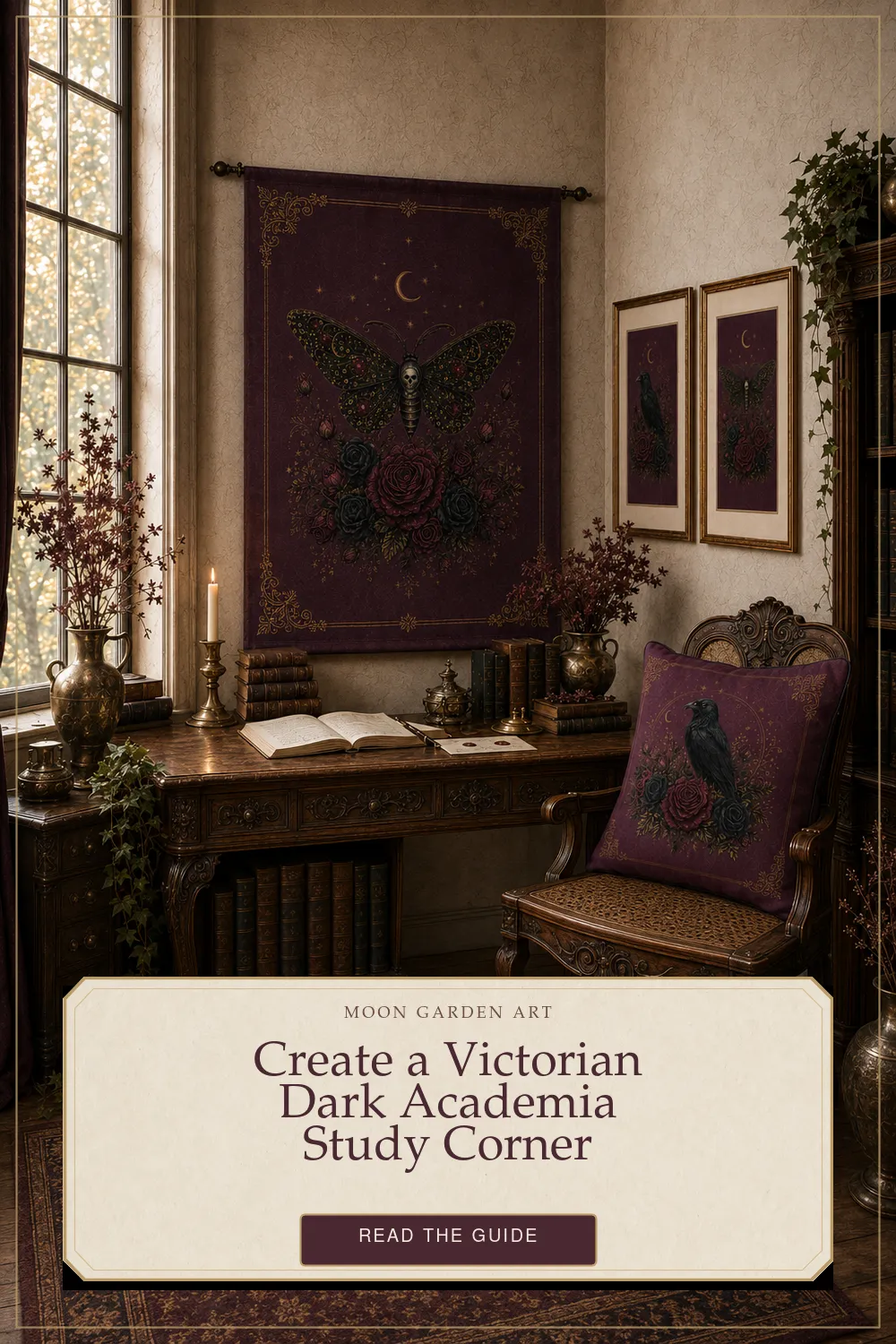
How to Create a Victorian Dark Academia Study Corner

How to Create a Victorian Dark Academia Study Corner

DARK ACADEMIA LIVING


How to Create a Victorian Dark Academia Study Corner

Layered textures, mood lighting, and antique-inspired details come together to create a space that feels timeless, introspective, and deeply personal.

Victorian Dark Academia color palette in antique plum, aged ivory, carved oak, aged brass, and soft black
Antique plum raven floral pillow styled on a carved Victorian chair

TEXTURE & TONE

Start with Meaningful Details

Accent pieces like decorative pillows bring depth and storytelling into your space.

Rich fabrics, moody florals, and symbolic motifs set the tone for a study that feels collected and intentional.

Antique Gold Oriental Divider

Look for details that speak to your curiosity, creativity, and love of the old world.

Antique Gold Oriental Divider

STYLING TIPS

Antique Gold Oriental Divider

LAYER YOUR LIGHT

Use warm ambient lighting, shaded lamps, brass accents, and candlelight to create a soft, focused glow.

BUILD IN LAYERS

Mix vintage books, aged wood, textiles, and natural elements for a space that feels collected over time.

EMBRACE MOOD

Deep colors and romantic details cultivate an atmosphere of inspiration and retreat.

MAKE IT PERSONAL

Curate pieces that reflect your passions and spark your imagination every time you enter.

Antique Gold Oriental Divider

WALLS THAT TELL A STORY

Antique Gold Oriental Divider
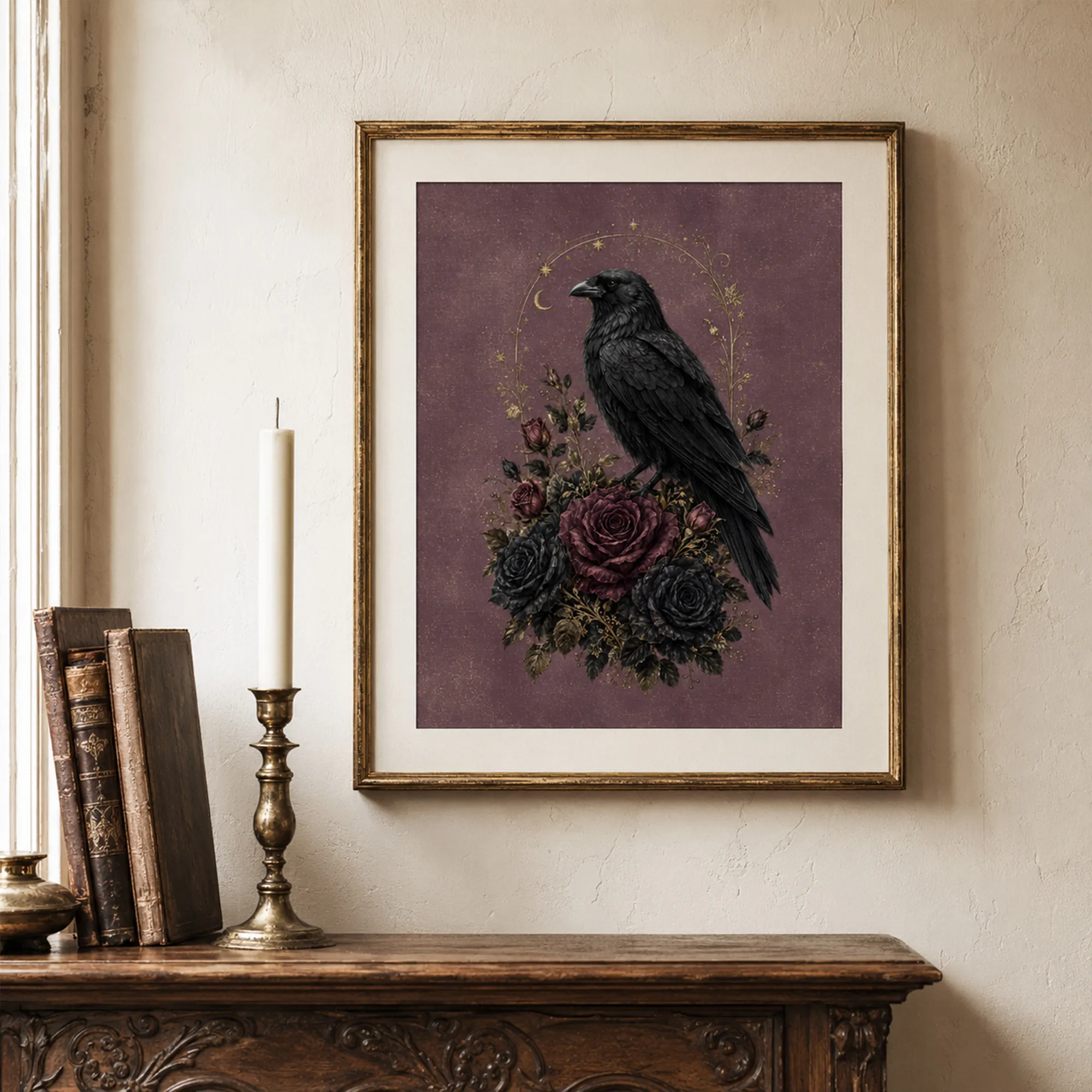
Antique plum raven floral wall art in a vintage brass frame above a dark wood desk

THE RAVEN

A symbol of wisdom and mystery, perfect for sparking thought and imagination.

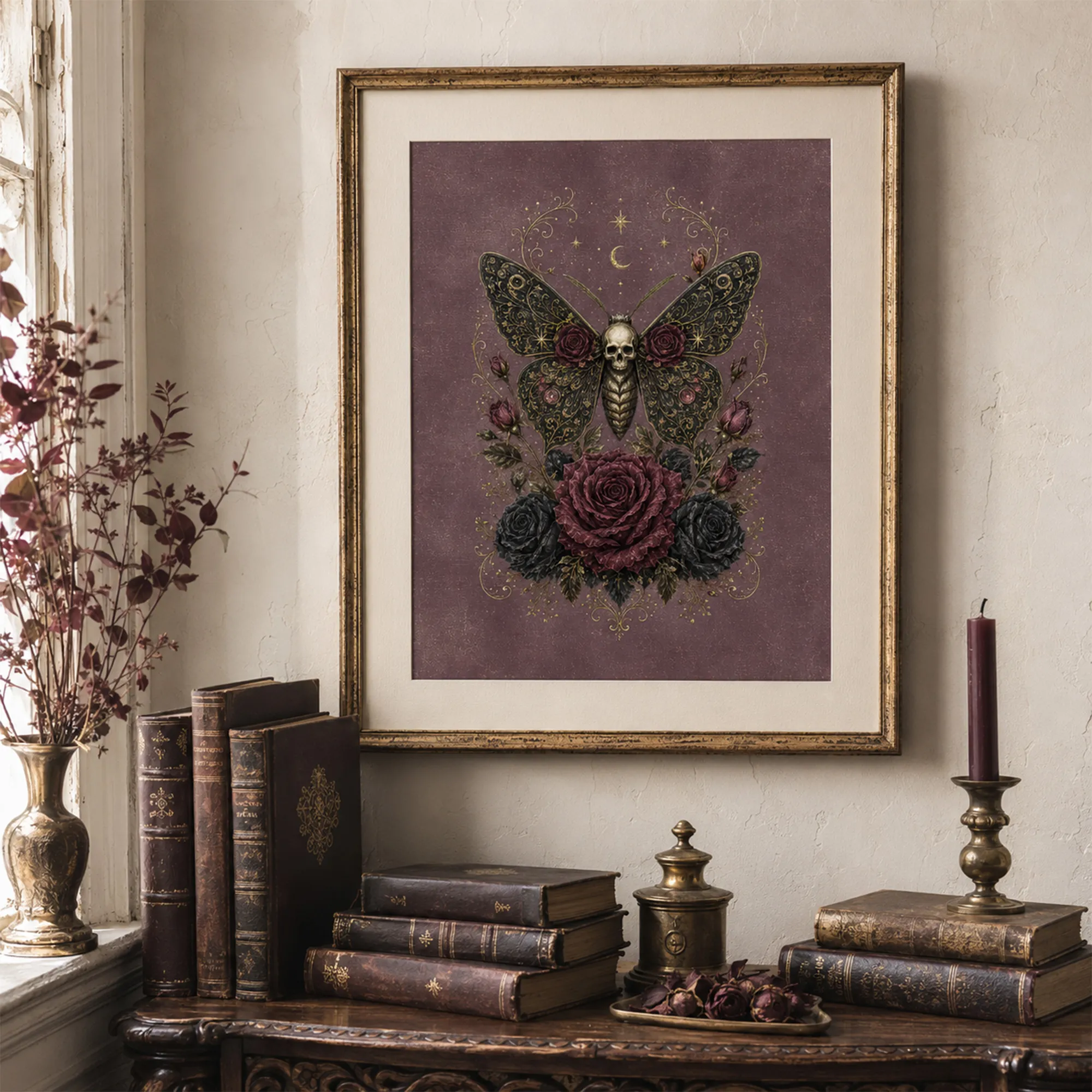
Antique plum raven floral wall art in a Victorian dark academia study corner

THE MOTH

Embrace transformation and the beauty of the macabre with this striking design.

Antique Gold Oriental Divider

SHOP THE LOOK

Antique Gold Oriental Divider

PIN IT FOR LATER

SAVE THIS IDEA FOR LATER

Planning your own Victorian dark academia study corner? Save this guide to Pinterest and return whenever you’re ready to layer the details.

THE SECRET IS IN THE LAYERS

Begin with one dramatic focal piece, then add warm light, aged books, meaningful art, and treasures collected over time.

Explore more soulful reads

More stories to nurture your spirit.

Why Doing Nothing Can Feel So Hard

Why Doing Nothing Can Feel So Hard

Why Doing Nothing Can Feel So Hard

Many people believe they struggle with rest because they are too busy, too ambitious, or simply bad at slowing down.

But often, the reason goes much deeper than that.

Sometimes, stillness feels uncomfortable because the moment we stop running, everything we have been avoiding begins to speak.


When Silence Becomes Loud

For some people, quiet feels peaceful.

For others, it feels unbearable.

The moment there is no distraction, no task, no noise, something begins to rise inside.

Old grief.
Loneliness.
Fear.
Shame.
Unprocessed emotions.
The voice of the inner child who has been ignored for a very long time.

And so, many people learn to live constantly outward.

Always doing.
Always solving.
Always moving.

Not because they truly want to.

But because stopping feels unsafe.


From “Being” to “Doing”

When a child grows up without unconditional acceptance, they often learn something painful very early:

I am only valuable when I am useful.

Love becomes connected to performance.

To achievement.
To helpfulness.
To emotional self-abandonment.

And slowly, the child stops experiencing themselves as a human being and begins experiencing themselves as a human doing.

John Bradshaw described this beautifully:
many wounded children stop feeling valuable simply because they exist.

Instead, they begin trying to earn their right to exist.

Through performance.
Through perfection.
Through usefulness.

Why Rest Can Trigger Shame

This is why rest can feel surprisingly uncomfortable — especially when gentle living has never felt natural or safe before.

Not because rest itself is dangerous.

But because stillness often activates old survival beliefs.

If I stop, I am lazy.
If I rest, I lose value.
If I am not productive, I do not deserve care.

And underneath all of this, there is often deep toxic shame.

The painful belief that: who I am is somehow not enough.

What May Surface in Stillness

When we finally slow down, many feelings may begin surfacing.

Fear.
Anxiety.
Emptiness.
Grief.
Confusion.
Loneliness.

This does not mean you are doing something wrong.

It often means you are finally hearing parts of yourself that were buried beneath constant activity.

And if these feelings become overwhelming, there is absolutely no shame in seeking support.

Healing was never meant to happen entirely alone.

Learning to Stay Present Without Becoming the Feeling

One of the gentlest shifts we can practice is this:

Instead of saying:
I am anxious.

We begin noticing:
Anxiety is present in me right now.

Instead of:
I am broken.

We notice:
Pain is moving through me right now.

This creates space.

Awareness.

Breathing room between you and the feeling itself.

You do not have to deny what you feel.

But you also do not have to become it.


Gentle Tools for the Moment

When difficult feelings arise during stillness, small grounding practices can help the nervous system feel safer.

You might try:

  • the 5-4-3-2-1 grounding exercise,
  • a slow breathing practice,
  • placing your hand over your heart,
  • sitting near an open window,
  • repeating a gentle mantra,
  • or simply naming what you feel without judgment.

Sometimes new permissions are needed too.

Quiet reminders such as:

I can rest without guilt.
Rest is a human need, not a reward.
I am still valuable when I am not producing.
I do not have to earn my right to exist.

Rest Is Not Emptiness

Many people fear that slowing down will make life smaller.

But often, the opposite begins to happen.

When we stop constantly running from ourselves, we slowly begin reconnecting with life again.

With the body.
With nature.
With presence.
With small moments of beauty.

Stillness is not always empty.

Sometimes, it is where we finally begin hearing ourselves clearly.

Explore more soulful reads

More stories to nurture your spirit.

What Happens When You Start Living With the Seasons Again

What Happens When You Start Living With the Seasons Again

What Happens When You Start Living With the Seasons Again

Modern life often asks us to live the same way all year long.

To keep producing.
Keep moving.
Keep achieving.

No matter the season.
No matter the weather.
No matter how tired we feel inside.

We are expected to function like machines.

But nature does not work this way.

And neither do we.


Remembering That We Are Part of Nature

Somewhere along the way, many of us began living as if we existed separately from the natural world.

As if our bodies, minds, and nervous systems should operate independently from rhythm, rest, and cycles.

But we are not outside nature.

We are part of it.

And often, healing begins when we stop trying to live against our own nature.


Winter — The Season of Quiet

In winter, the days become shorter.

The world slows down.

Trees rest.
Animals conserve energy.
The earth becomes quieter.

And many people notice the same thing within themselves.

Less energy.
More introspection.
A desire for stillness.

This is not failure.

It is a natural rhythm.

Winter is not asking us to bloom.

It invites us inward.

Not necessarily into trauma processing or emotional heaviness.

Sometimes simply into reflection.

Into silence.
Rest.
Reading.
Warm drinks.
Slower mornings.
Early evenings.

Nature never asks the tree to bloom in winter.

And yet, many people expect this from themselves.


Spring — The Return of Energy

Then, slowly, the light returns.

The days grow longer.

Something begins to wake up again.

Not overnight.

But gently.

You may notice:

  • more motivation,
  • more creativity,
  • more desire to move,
  • more openness toward life.

Just like the trees begin to bud and flower, we also begin reaching outward again.

Ideas return.

Energy returns.

Hope returns.


Summer — Expansion and Aliveness

Summer carries fullness.

Growth.
Connection.
Movement.

This is often the season of creating, exploring, gathering experiences, and bringing ideas into reality.

The energy naturally moves outward.

And when we allow ourselves to fully live during these seasons of abundance, we begin storing something important internally too.

Not just memories.

But nourishment.


Autumn — Gathering and Letting Go

Autumn reminds us to slow down again.

To harvest what we have grown.

To notice what worked.
What mattered.
What sustained us.

And also:

what no longer needs to be carried forward.

There is wisdom in preparing slowly for quieter seasons.

Just like a full pantry makes winter gentler, the emotional and practical foundations we build during active seasons help us move through harder periods with more trust and stability.


This Is Not Meant to Become Another Rule

Living seasonally does not mean forcing yourself into rigid routines.

It is not another system to perform perfectly.

These rhythms are not commands.

They are invitations.

Gentle frameworks.

Ways of listening more closely to yourself and the world around you.

Some winters may feel lighter.
Some summers may feel quiet.

And that is okay too.

The point is not perfection.

The point is awareness.


Returning to Rhythm

Many people are exhausted because they have spent years pushing against themselves.

Ignoring tiredness.
Ignoring limits.
Ignoring the need for rest, quiet, or slowness.

But nature teaches something different.

Everything has its season.

Everything has its time.

Rest is not separate from growth.

It is part of growth.

And perhaps life becomes softer when we stop asking ourselves to bloom constantly.


A Quiet Reminder

You do not need to live in perfect harmony with nature to begin reconnecting with it.

Sometimes it starts very simply.

Opening the window in the morning.
Noticing the changing light.
Walking without headphones.
Watching the trees move in the wind.

Small moments of remembering.

That you are not separate from this world.

You belong to it.

Explore more soulful reads

More stories to nurture your spirit.

Pin It on Pinterest