Who Are You Without Rescuing? Identity After Trauma

Who Are You Without Rescuing? Identity After Trauma

When You Stop Rescuing, Who Are You?

There is a strange quiet after you stop rescuing.

No emergency.

No one to stabilize.

No emotional fire to put out.

Just space.

And sometimes that space feels unbearable.


The Role You Learned to Play

Rescuing wasn’t random.

It became who you were.

The responsible one.
The calm one.
The fixer.
The emotional adult.

Especially if you grew up around addiction, instability, or unpredictability.

Someone had to hold it together.

So you did.

And over time, being needed became your identity.

Not because you were controlling.

Because you were surviving.


The Emptiness After Over-Functioning

When you stop over-functioning, something unexpected surfaces.

Emptiness.

Not peace.
Not relief.

Emptiness.

If no one needs you urgently, who are you?

If no one is falling apart, what do you do with your energy?

The nervous system that was trained for vigilance does not immediately know how to rest.

Silence can feel like loss.


Grieving the Identity That Kept You Safe

There is grief here.

Grief for the role that once protected you.

Grief for the illusion that if you just loved harder,
fixed better, managed more carefully…

things would change.

Letting go of rescuing is not just behavioral.

It is existential.

You are releasing a version of yourself that earned belonging through usefulness.

That version deserves compassion.

It kept you alive.

But you do not have to remain her.


Becoming Someone Without a Crisis to Fix

This is where it gets uncomfortable.

Without crisis, without chaos, without someone else’s emotions to regulate — you are left with yourself.

Your needs.

Your desires.

Your anger.

Your fatigue.

For many trauma survivors, rescuing was a distraction from the self.

If I am focused on you, I don’t have to face me.

Shifting the focus inward can feel foreign.

Even selfish.

Even dangerous.

But it is where agency lives.


The In-Between Identity

There is a phase where you are not the old version anymore, but the new version is not fully formed.

This is the in-between.

You may feel less certain.
Less admired.
Less indispensable.

But also—more honest.

More regulated.

More real.

Identity is reorganizing.

Not collapsing.


Who Are You Without the Role?

Maybe you are someone who rests before exhaustion.

Maybe you are someone who cares without controlling.

Maybe you are someone who allows adults to carry adult weight.

Maybe you are someone whose worth is not measured by how much crisis you can absorb.

You do not have to know the full answer yet.

You only have to stay.

Stay with yourself long enough to meet the quieter identity underneath.

The one that doesn’t need to earn love through rescue.

The one that can exist without proving usefulness.

The one that heals without managing anyone else’s life.

Explore more soulful reads

More stories to nurture your spirit.

When Boundaries Feel Like Guilt

When Boundaries Feel Like Guilt

When Boundaries Feel Like Guilt

And Why That’s Not a Sign You’re Wrong

Sometimes the moment you stop rescuing you don’t feel powerful.

You feel cruel.

Selfish.

Wrong.

Your chest tightens.
Your thoughts get loud.
Your body wants to go back and fix it.

Because for a long time, being needed felt like being safe.

Trauma Teaches You That Love = Over-Responsibility

If you grew up around addiction, chaos, or emotional instability, someone always needed saving.

An alcoholic parent.
A volatile mother.
A depressed father.

You learned early:

If I manage this well enough, maybe it will stabilize.

Maybe they will see.
Maybe they will stop.
Maybe I can prevent the explosion.

And organizations like Adult Children of Alcoholics describe this clearly:

Hope becomes a survival strategy.
Control becomes love.
Hyper-responsibility becomes identity.

Rescuing wasn’t kindness.

It was adaptation.

So What Was the Hidden Reward?

Here is the uncomfortable question:

If rescuing cost you so much…
what did it give you?

A sense of purpose?

A feeling of superiority?

Moral high ground?

The illusion of control?

If I am fixing you, I don’t have to feel my own grief.

If I am managing your chaos, I don’t have to face my emptiness.

If I am indispensable, I cannot be abandoned.

Rescuing is exhausting.

But it is also regulating.

It gives structure to a nervous system that once survived unpredictability.

Guilt Is Often a Withdrawal Symptom

When you stop over-functioning, your body panics.

Not because you are wrong.

But because you broke a survival contract.

You said:

I am not responsible for your feelings.
I am not responsible for your growth.
I am not responsible for preventing your consequences.

And your nervous system hears:

Danger.

The guilt that follows is often not moral.

It is neurological.

It is the body withdrawing from a familiar role.

The Space After You Stop Rescuing

This is the part no one romanticizes.

When you stop managing other people’s lives, there is space.

And space can feel like falling.

Because if you are not the fixer, who are you?

If you are not the stabilizer, what remains?

Sometimes the rescue reflex was protecting you from yourself.

From your sadness.
From your rage.
From your unmet needs.

From the terrifying possibility that you can heal even if they never change.

Compassion Without Self-Abandonment

You can care without controlling.

You can love without over-functioning.

You can witness someone’s struggle without making it your project.

This is not coldness.

It is differentiation.

It is letting adults carry adult weight.

It is letting consequences teach what you cannot.

Reframing the Guilt

Guilt doesn’t always mean you hurt someone.

Sometimes it means you stopped hurting yourself.

Sometimes it means you stepped out of a role that once kept you alive.

Sometimes it means you are learning that your healing does not require anyone else’s collapse or transformation.

You are allowed to shift the focus inward.

Even if it feels empty at first.

Even if it feels unfamiliar.

Even if it feels like loss.

Because what you are actually losing is the illusion that you were ever in control of someone else’s life.

And what you are gaining is agency.

Quiet.

Self-trust.

And a nervous system that no longer has to earn its place by saving everyone else.

Explore more soulful reads

More stories to nurture your spirit.

Why Healing Cannot Happen Alone

Why Healing Cannot Happen Alone

Why Healing Cannot Happen Alone

The Quiet Power of Safe and Supportive Spaces

There is a moment in healing that no one really prepares you for.

It is the moment when you finally step away from a toxic system —
and realize you could not have done it alone.

For many of us who grew up in narcissistic or emotionally abusive environments, survival required adaptation. We learned to minimize ourselves. To doubt our perceptions. To silence our inner compass.

We were told:

“You’re too sensitive.”
“That never happened.”
“It was just a joke.”
“You should be grateful.”
“Without me, you would be nothing.”

Over time, these messages do something devastating.
They disconnect us from our own knowing.

And when we finally see the manipulation clearly, when we choose distance, boundaries, or even no contact — we often assume that strength alone carried us there.

But strength is rarely solitary.

It is relational.


The Mirror We Never Had

In a toxic family system, reflection is distorted.
Your emotions are minimized.
Your pain is mocked.
Your reality is rewritten.

You begin to question yourself before anyone else does.

Then something shifts.

You encounter a different kind of presence.

A partner who listens.
A therapist who does not invalidate.
A support group where your story is not “too much.”
A community where vulnerability is not weaponized.

And suddenly, a new mirror appears.

In this mirror, you are not dramatic.
You are not ungrateful.
You are not broken.

You are wounded — and worthy.

This is when the contrast becomes visible.

You realize what was missing for decades.

And grief follows.

Healing Is Co-Regulated

There is a truth we do not speak about enough:

The nervous system heals in connection.

You cannot regulate trauma in isolation if the trauma was relational.

Safety is learned in relationship.
Trust is rebuilt in relationship.
Reality is stabilized in relationship.

At first, safety is borrowed.

You borrow calm from your therapist’s voice.
You borrow steadiness from your partner’s presence.
You borrow courage from others in recovery.

Over time, something changes.

The borrowed safety becomes embodied.

But it does not begin that way.

And there is no shame in that.

Why Support Is Not Weakness

In narcissistic systems, isolation is strategic.

Shame keeps you silent.
Fear keeps you compliant.
Confusion keeps you dependent.

When you step out, you are vulnerable — like new skin after shedding an old layer.

This is not the time to be alone.

Support is not a luxury in healing.
It is infrastructure.

It is the difference between collapse and integration.

It is what allows you to grieve without dissolving.

It is what helps you hold your ground when doubt creeps in:

“What if I am the problem?”
“What if I am too much?”
“What if I misunderstood everything?”

A safe environment gently separates illusion from reality.

And that separation is liberation.

The Grief That Comes With Clarity

There is another layer that often surprises us.

When we truly see who our parent is — not the fantasy, not the hopeful projection — grief deepens.

We grieve the love we imagined.
We grieve the protection we never had.
We grieve the version of them we needed.

And yet…

We no longer need to distort reality to survive.

That is freedom.

Painful.
But real.

If You Are in This Season

If you are reading this and you feel like your world is unraveling…

If you have recently created distance from someone who once held power over your life…

If you feel grief, anger, and moments of doubt…

You are not weak.

You are reorganizing your internal world.

But please hear this:

You do not have to do it alone.

Look for support.

A therapist.
A recovery group.
A trusted friend.
A community that understands trauma.

Healing requires safe witnesses.

A Gentle Reflection

Ask yourself:

Where do I feel safe enough to soften?
Who reflects me back to myself without distortion?
What spaces remind me that my experience is valid?

If you cannot answer these yet, that is not failure.

It is an invitation.

Closing Mantra

You may want to sit with this for a moment:

I am allowed to heal in connection.
I am not meant to carry this alone.
Safe people help me remember who I am.

Healing is not about becoming invincible.

It is about becoming supported.

And from support, strength grows quietly —
steady, rooted, real.

And if your nervous system still trembles — that doesn’t mean you’re wrong. It means you’re healing.

Explore more soulful reads

More stories to nurture your spirit.

Imbolc — Tending the First Light

Imbolc — Tending the First Light

Imbolc — Tending the First Light

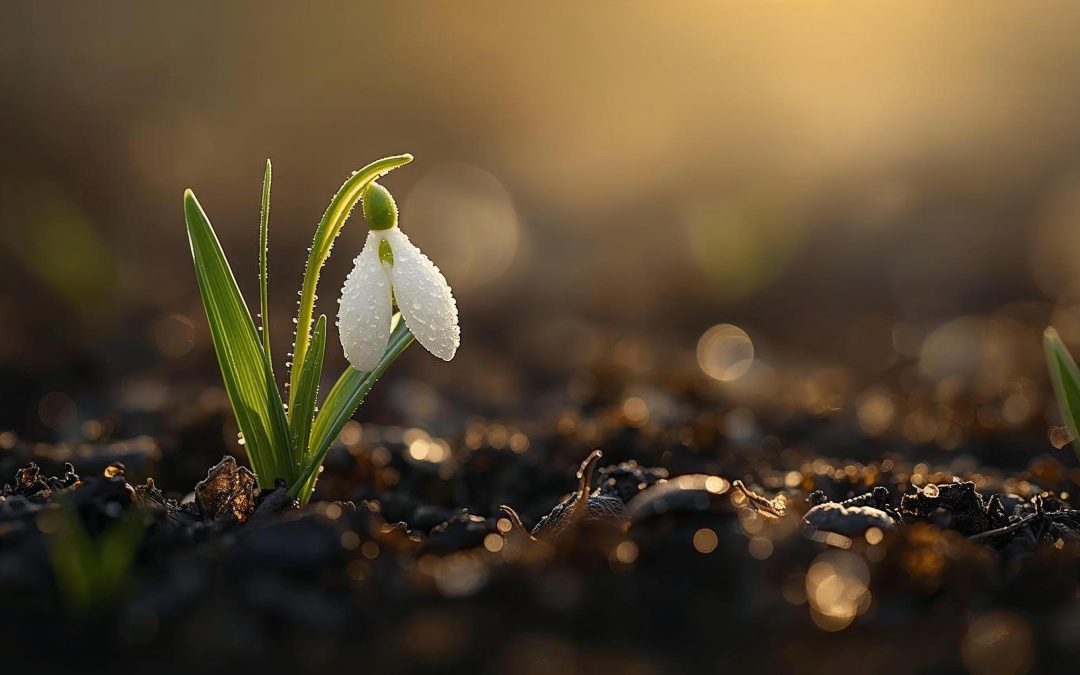
Imbolc arrives quietly.

Not with the certainty of spring,
not with visible results,
but with a subtle shift we can feel before we can explain it.

The days are still cold.
The earth still rests.
And yet — something inside us begins to stir.

This is the season of almost.
Almost ready.
Almost awake.
Almost brave enough to believe.

Imbolc in the Wheel of the Year

In the old seasonal rhythm, Imbolc marks the halfway point between the deep stillness of winter and the outward movement of spring.

It is not a time of arrival.
It is a time of tending.

The light has returned enough to be felt —
but not enough to be trusted blindly.

Imbolc lives in the in-between.
And so do we.

Brigid and the Gentle Fire

Imbolc is often associated with Brigid — goddess of healing, poetry, hearth, and sacred fire.

Not the fire that conquers or consumes,
but the fire that warms, protects, and keeps watch.

Brigid does not rush growth.
She teaches us how to stay close to what is alive,
even when it is still fragile.

This is not the fire of ambition.
It is the fire of care.

When Inner Movement Meets Doubt

As Imbolc approaches, many of us feel a familiar tension.

Inside, there is energy.
Ideas. Longings. A desire to move forward.

And yet — there is hesitation.

We want to see results before we commit fully.
We want proof before we invest our hearts.
So we move carefully, halfway, holding back.

Not because we lack discipline —
but because doubt learned how to keep us safe.

For many people, this hesitation is not laziness or fear of failure.
It is a survival strategy formed long ago:

If I don’t hope too much, it won’t hurt as much if it doesn’t work.

Imbolc gently exposes this pattern — not to shame it, but to soften it.

If you’d like to explore this season more deeply, I wrote earlier about Imbolc as the courage to hope — the moment before anything truly begins to bloom.


Releasing the Need for Control

Imbolc does not ask us to control the outcome.

It asks us to tend the process.

Seeds underground do not know how spring will arrive.
They respond to warmth, moisture, and time.

They do not rush because they trust the season to change.

In the same way, this moment in our lives does not require certainty.
It requires presence.

We are not asked to believe blindly.
Only to show up honestly.

If this tension between trust and doubt feels familiar, you might find resonance in this reflection on letting go of control:
When Letting Go of Control Becomes Trust

Simple Ways to Honor Imbolc

Imbolc does not need elaborate rituals.

Its magic lives in small gestures:

  • Lighting a candle with intention, not expectation
  • Opening a window to let fresh air in
  • Making a warm drink and drinking it slowly
  • Writing a single question in your journal:
    • What is already alive in me?
    • What am I gently tending right now?

These acts are not preparation for life.
They are life.

The Courage of Quiet Hope

Imbolc teaches us that hope does not shout.

It hums softly.
It flickers.
It waits.

And sometimes the bravest thing we can do is continue tending something we cannot yet prove will grow.

The light is not asking you to hurry.
It is asking you to stay.

A Mantra for Imbolc

You may return to this mantra during the day, or hold it gently during meditation:

I tend what is alive in me.
I do not need proof to care.
I trust the season to change.

Let it be a reminder that presence is already an act of faith.

Explore more soulful reads

More stories to nurture your spirit.

When Letting Go of Control Becomes Trust

When Letting Go of Control Becomes Trust

When Letting Go of Control Becomes Trust

There comes a point on many healing paths when effort alone is no longer enough.

We can learn coping skills.
We can reflect, journal, observe patterns.
We can work tirelessly to “do things right.”

And still, beneath all that effort, there is often a quiet tension — the feeling that if we loosen our grip, everything might fall apart.

For many of us, especially those shaped by early instability, control once felt like safety.
If I stay alert, if I anticipate every outcome, if I manage myself perfectly, maybe nothing bad will happen.

But control is heavy.
And it is also an illusion.

We can only ever truly guide ourselves — our choices, our responses, our willingness to stay present. Everything else unfolds in ways no amount of vigilance can fully predict.

The Illusion of Control and the Fear Beneath It

In recovery spaces, especially within 12-step frameworks, we often encounter the invitation to “turn things over to a Higher Power.”

For some, this language brings relief.
For others, it brings resistance, fear, or even grief.

When higher power is framed through rigid, hierarchical, or dogmatic images, it can feel like exchanging one form of control for another — one that demands obedience rather than offering safety.

But at its heart, this step is not about submission.
It is about trust.

Trust that life is not actively working against us.
Trust that we are held within something larger than our individual will.
Trust that letting go does not mean abandonment.

Reimagining the Greater Presence as Care

For many of us, the idea of feminine archetypes or goddesses feels more accessible, more humane, and more emotionally safe than traditional religious structures.

Not because they are superior —
but because they are relational.

They do not rule from above.
They walk alongside.
They do not demand belief.
They invite connection.

There is an old image that has stayed with me:

“The goddesses brushed the women’s hair. They walked among us.”

Not as distant symbols.
Not as figures of power and punishment.
But as quiet presences woven into ordinary moments of care.

Perhaps this is how trust returns — not through grand declarations, but through small, embodied experiences of being accompanied.

Trust as a Lived Experience

Letting go of control does not mean passivity.
It does not mean doing nothing or abandoning responsibility.

It means recognizing the difference between guidance and grasping.

When we loosen our grip, something unexpected can happen:
space opens.

In that space, we begin to notice signs — not as proof, but as reassurance.
A moment of calm where we expected panic.
A small alignment that arrives just in time.
A sense that we are not navigating life entirely alone.

Trust grows slowly.
Especially for those whose early environments made trust unsafe.

And that is okay.

Walking With, Not Handing Over

To trust something greater than ourselves does not require surrendering our agency.
It asks only that we stop carrying what was never ours to hold alone.

The archetypal feminine — whether named as goddesses, forces of nature, or inner qualities — offers a model of strength that is not built on domination, but on presence.

It reminds us that care is a form of power.
That intuition is a kind of intelligence.
That life continues to move, even when we pause.

A Quiet Invitation

Perhaps trusting the greater rhythm of life does not begin with belief.
Perhaps it begins with allowing ourselves to rest inside uncertainty without trying to conquer it.

To loosen the grip.
To breathe.
To let ourselves be guided — not commanded — by something gentler.

The path does not require certainty.
Only willingness.

And maybe, in moments we least expect, we will feel it —
that subtle sense of being accompanied,
as if someone were quietly brushing our hair,
reminding us that we are not alone.

Explore more soulful reads

More stories to nurture your spirit.

Pin It on Pinterest