
THE CHRISTMAS GIFT EDIT Gifts for the Witch at Heart Moonlit Botanicals Personalized treasures for the moon lover, the nature soul, and the woman who...

Compassion Without Rescue
Compassion Without Rescue
Staying Kind Without Losing YourselfThere is a quiet archetype that lives in many of us who grew up in unstable or toxic environments.
The watcher.
The mood-reader.
The emotional regulator.
The one who keeps the peace.
As children, we learned quickly:
If the atmosphere is calm, we are safe.
If someone is angry, unpredictable, or collapsing — danger is near.
So we adapted.
We scanned the room.
We adjusted our tone.
We softened conflict.
We tried to control what was never ours to control: other people’s emotions.
It was not manipulation.
It was survival.
But survival strategies do not always retire when danger passes.
When Compassion Turns Into Rescue
As adults, this early conditioning can quietly morph into something that looks noble:
We become helpers.
Supporters.
Fixers.
Rescuers.
We feel deeply.
We want to ease suffering.
We cannot bear to see someone in pain.
But here is the subtle truth:
Compassion says,
“I see your pain.”
Rescue says,
“Let me carry it for you.”
And carrying is heavy.
We Are Not Responsible for Another Adult’s Emotions
This is one of the hardest truths to internalize.
We are not responsible for:
- managing someone else’s mood
- preventing their discomfort
- fixing their exhaustion
- dissolving their grief
In fact, when we rush to make someone feel better, we may unintentionally invalidate their experience.
Not every pain needs to be removed.
Some pain needs to be witnessed.
The difference is subtle, but profound.
The Illusion of Control
In toxic family systems, children are often conditioned to regulate their parents.
To calm them.
To appease them.
To prevent explosions.
Safety depended on emotional management.
So of course rescue feels familiar.
It feels like love.
It feels like responsibility.
But often, it is fear wearing a gentle mask.
Fear of conflict.
Fear of abandonment.
Fear of not being needed.
The Hidden Cost of Rescue
When we rescue:
- we step into over-functioning
- we absorb what is not ours
- we drain our own nervous system
- we blur boundaries
And there is something else, even more important.
When we take over someone’s struggle, we remove their agency.
We silently communicate:
“I will do this for you.”
“You don’t have to.”
“You might not be able to.”
And while that may feel protective, it can rob someone of:
- responsibility
- growth
- ownership
- strength
Growth requires participation.
Healing requires agency.
Rescue as Avoidance
There is another layer many of us must face with honesty.
Sometimes, rescuing others is easier than sitting with our own grief.
It gives us purpose.
It makes us valuable.
It distracts us from the places inside that still ache.
We can spend decades being helpful.
Kind.
Needed.
And never look at the wounds that shaped us.
It is easier to save someone else
than to sit quietly with our own pain.
This is not judgment.
It is awakening.
What Compassion Without Rescue Looks Like
It sounds like:
“I hear you.”
“That sounds heavy.”
“You deserve support.”
“I trust you to take your next step.”
It feels like:
- staying in your body
- not over-functioning
- not fixing
- not absorbing
It is warmth without collapse.
It is kindness with boundaries.
The Shift
When we release the need to rescue:
- our energy stabilizes
- our nervous system softens
- our relationships become clearer
- our care becomes cleaner
We are no longer reacting from childhood fear.
We are choosing from adult awareness.
And perhaps most importantly:
We free ourselves.
A Closing Mantra
I can care without carrying.
I can witness without absorbing.
I can love without rescuing.
I can stay kind and stay whole.
Explore more soulful reads
More stories to nurture your spirit.

Gifts for the Witch at Heart: A Christmas Gift Guide

Victorian Samhain Gathering Guide
Create an elegant Victorian Samhain gathering filled with candlelight, autumn abundance, meaningful remembrance and beautifully coordinated details.
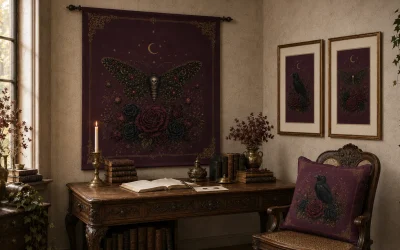
How to Create a Victorian Dark Academia Study Corner
DARK ACADEMIA LIVING How to Create a Victorian Dark Academia Study Corner Layered textures, mood lighting, and antique-inspired details come together...