
THE CHRISTMAS GIFT EDIT Gifts for the Witch at Heart Moonlit Botanicals Personalized treasures for the moon lover, the nature soul, and the woman who...
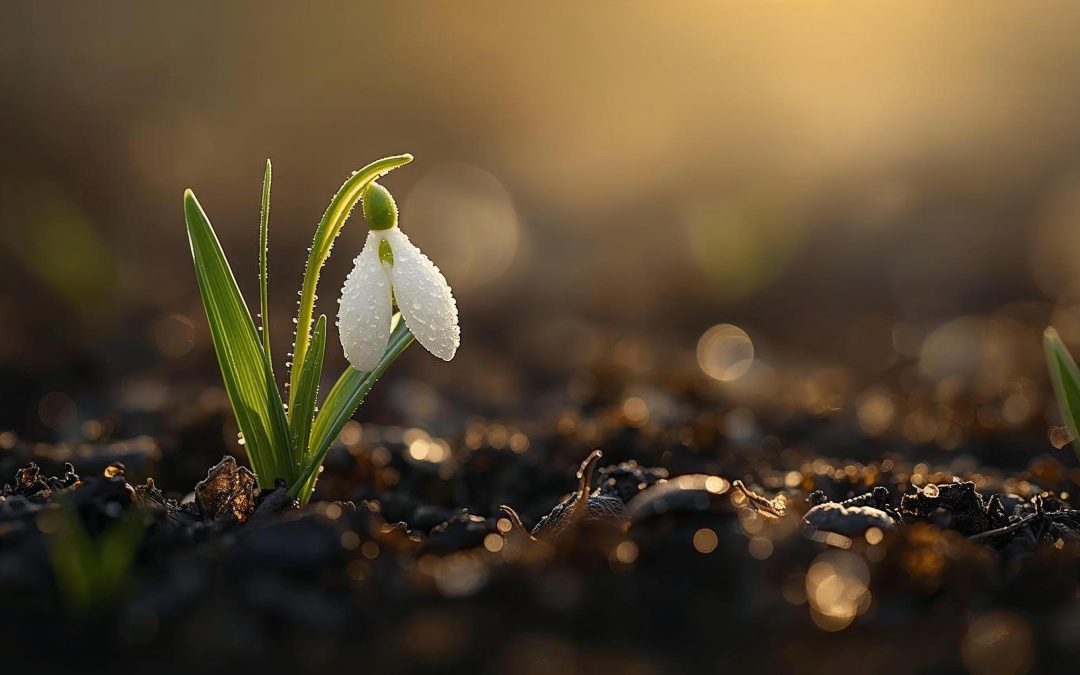
Imbolc — Tending the First Light
Imbolc — Tending the First Light
Imbolc arrives quietly.
Not with the certainty of spring,
not with visible results,
but with a subtle shift we can feel before we can explain it.
The days are still cold.
The earth still rests.
And yet — something inside us begins to stir.
This is the season of almost.
Almost ready.
Almost awake.
Almost brave enough to believe.
Imbolc in the Wheel of the Year
In the old seasonal rhythm, Imbolc marks the halfway point between the deep stillness of winter and the outward movement of spring.
It is not a time of arrival.
It is a time of tending.
The light has returned enough to be felt —
but not enough to be trusted blindly.
Imbolc lives in the in-between.
And so do we.
Brigid and the Gentle Fire
Imbolc is often associated with Brigid — goddess of healing, poetry, hearth, and sacred fire.
Not the fire that conquers or consumes,
but the fire that warms, protects, and keeps watch.
Brigid does not rush growth.
She teaches us how to stay close to what is alive,
even when it is still fragile.
This is not the fire of ambition.
It is the fire of care.
When Inner Movement Meets Doubt
As Imbolc approaches, many of us feel a familiar tension.
Inside, there is energy.
Ideas. Longings. A desire to move forward.
And yet — there is hesitation.
We want to see results before we commit fully.
We want proof before we invest our hearts.
So we move carefully, halfway, holding back.
Not because we lack discipline —
but because doubt learned how to keep us safe.
For many people, this hesitation is not laziness or fear of failure.
It is a survival strategy formed long ago:
If I don’t hope too much, it won’t hurt as much if it doesn’t work.
Imbolc gently exposes this pattern — not to shame it, but to soften it.
If you’d like to explore this season more deeply, I wrote earlier about Imbolc as the courage to hope — the moment before anything truly begins to bloom.
Releasing the Need for Control
Imbolc does not ask us to control the outcome.
It asks us to tend the process.
Seeds underground do not know how spring will arrive.
They respond to warmth, moisture, and time.
They do not rush because they trust the season to change.
In the same way, this moment in our lives does not require certainty.
It requires presence.
We are not asked to believe blindly.
Only to show up honestly.
If this tension between trust and doubt feels familiar, you might find resonance in this reflection on letting go of control:
When Letting Go of Control Becomes Trust
Simple Ways to Honor Imbolc
Imbolc does not need elaborate rituals.
Its magic lives in small gestures:
- Lighting a candle with intention, not expectation
- Opening a window to let fresh air in
- Making a warm drink and drinking it slowly
- Writing a single question in your journal:
- What is already alive in me?
- What am I gently tending right now?
These acts are not preparation for life.
They are life.
The Courage of Quiet Hope
Imbolc teaches us that hope does not shout.
It hums softly.
It flickers.
It waits.
And sometimes the bravest thing we can do is continue tending something we cannot yet prove will grow.
The light is not asking you to hurry.
It is asking you to stay.
A Mantra for Imbolc
You may return to this mantra during the day, or hold it gently during meditation:
I tend what is alive in me.
I do not need proof to care.
I trust the season to change.
Let it be a reminder that presence is already an act of faith.
Explore more soulful reads
More stories to nurture your spirit.

Gifts for the Witch at Heart: A Christmas Gift Guide
Victorian Samhain Gathering Guide
Create an elegant Victorian Samhain gathering filled with candlelight, autumn abundance, meaningful remembrance and beautifully coordinated details.
How to Create a Victorian Dark Academia Study Corner
DARK ACADEMIA LIVING How to Create a Victorian Dark Academia Study Corner Layered textures, mood lighting, and antique-inspired details come together...