
THE CHRISTMAS GIFT EDIT Gifts for the Witch at Heart Moonlit Botanicals Personalized treasures for the moon lover, the nature soul, and the woman who...

Imbolc Is Not Spring — It Is the Courage of Hope
Imbolc Is Not Spring — It Is the Courage of Hope
In this Imbolc reflection, patience becomes an act of trust rather than waiting for certainty.
Imbolc arrives quietly.
There is still cold in the ground.
The days are longer, but winter has not released its grip.
Nothing is blooming yet — and still, something has shifted.
Imbolc is often misunderstood as the beginning of spring, but it is not.
It is not about results, growth, or visible change.
Imbolc is about hope before proof.
And that takes courage.
When Faith Is Needed Most
There are seasons in life when faith is not optional — because certainty is not yet available.
The outcome is still unknown.
The intention has been set, but the evidence has not arrived.
The path feels chosen, but untested.
This is when trust matters most.
Not the loud kind of faith that declares everything will be fine,
but the quiet kind that says: I will stay with this, even when I don’t yet know how it ends.
Imbolc teaches us that faith is not naïve optimism.
It is inner steadiness in the absence of reassurance.
Learning to Walk Without Forcing the Path
Survival mode is often project-oriented.
It wants timelines, milestones, and conclusions.
It asks, When will this be over?
It stays hyper-alert, scanning for danger, pushing for resolution.
That way of being once kept us safe — and we can honor that.
But Imbolc invites something different.
It asks us to loosen the grip of urgency.
To release the belief that everything must be managed, fixed, or completed as quickly as possible.
This is not passivity.
It is patience born from safety.
True patience only emerges when we begin to trust the process itself — when we no longer feel that pausing will cause everything to collapse.
The Wisdom of the Natural Cycle
Nature does not rush Imbolc.
Seeds remain hidden beneath frozen soil.
Sap begins to rise long before buds appear.
Life prepares itself quietly, without performance.
This is the loving lesson of the season:
nothing meaningful is forced.
In many earth-based traditions, this wisdom has long been held by feminine archetypes — by goddesses who embody care rather than command, rhythm rather than control.
They do not demand growth.
They create the conditions for it.
Imbolc carries the energy of the patient, nurturing mother — the one who tends the fire, warms what is fragile, and waits without anxiety for life to unfold in its own time.
This way of understanding life — as something that teaches through rhythm rather than force — is also present in many goddess traditions, where wisdom is offered through presence, not command.
When Letting Go of Control Becomes Trust
Trusting the Path Before the Proof
This season reminds us that there is no such thing as a purely good or purely bad phase in life.
There are only experiences — and our relationship to them.
When we learn to trust the direction we have chosen, even before it bears fruit, we begin to relate to life differently.
Not as something to conquer, but as something to learn from.
This shift does not come from effort.
It comes from softening.
If you wish to explore this theme more deeply, you may find resonance in the earlier reflection, When Letting Go of Control Becomes Trust, which speaks to the courage it takes to release the illusion of control and rest in something greater than fear.
Imbolc as a Gentle Teacher
Imbolc does not shout its lessons.
It teaches by example — by showing us how life prepares without rushing, how growth begins invisibly, and how care precedes change.
It reminds us that we are allowed to:
- move slowly
- trust without certainty
- remain open even when nothing is guaranteed
This is not weakness.
This is wisdom.
Imbolc is not the answer.
It is the space where answers are kept warm until they are ready.
And that, too, is a form of love.
Explore more soulful reads
More stories to nurture your spirit.

Gifts for the Witch at Heart: A Christmas Gift Guide
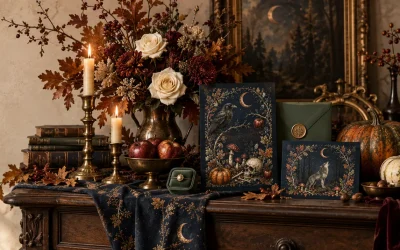
Victorian Samhain Gathering Guide
Create an elegant Victorian Samhain gathering filled with candlelight, autumn abundance, meaningful remembrance and beautifully coordinated details.
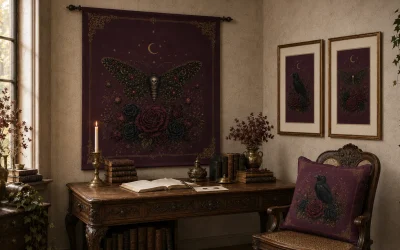
How to Create a Victorian Dark Academia Study Corner
DARK ACADEMIA LIVING How to Create a Victorian Dark Academia Study Corner Layered textures, mood lighting, and antique-inspired details come together...