Tending the Flame — Gentle Habits, Quiet Hope, and the Courage to Stay

Tending the Flame — Gentle Habits, Quiet Hope, and the Courage to Stay

Tending the Flame

Gentle Habits, Quiet Hope, and the Courage to Stay

Imbolc does not arrive with answers.
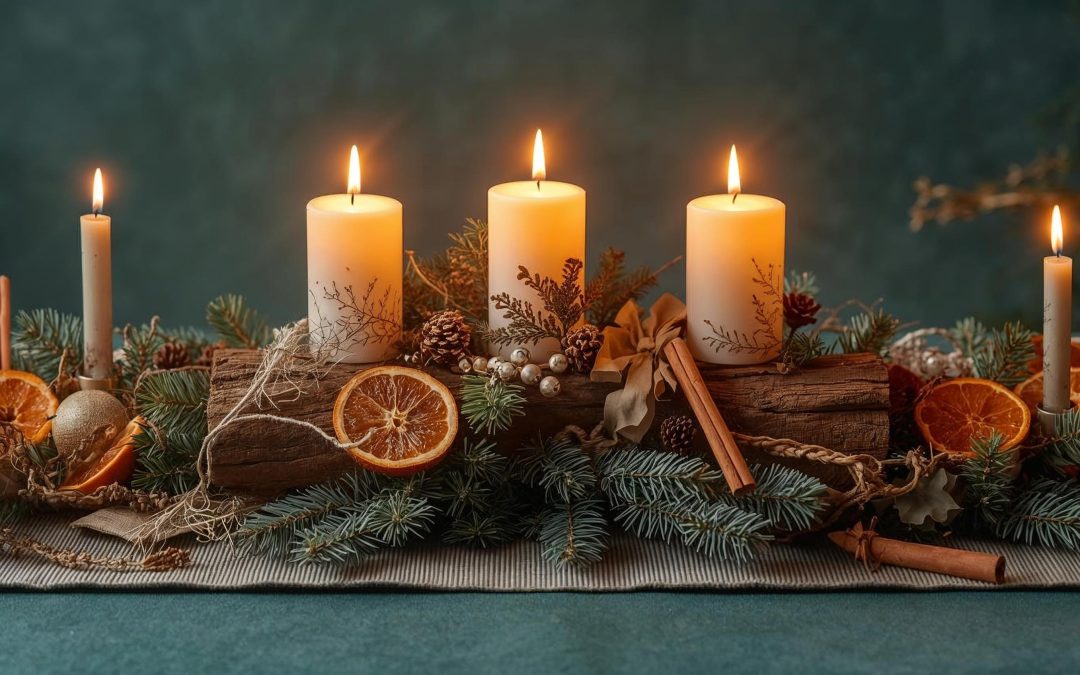
It arrives with a small flame — fragile, steady, and asking to be tended rather than forced.

Three weeks have passed since the beginning of the year.
For many of us, this is the moment when good intentions begin to meet reality.
Some habits feel supportive. Others falter. Resistance appears. Motivation shifts.

Imbolc does not ask us to judge any of this.
It asks us to notice.

The Courage to Begin Without Certainty

Hope is often misunderstood as optimism — as confidence that everything will work out.
But Imbolc teaches a different kind of hope.

This is hope before evidence.
Hope that exists even when outcomes are unclear.
Hope that does not rely on results, but on trust.

In this season, faith is not loud or triumphant.
It is quiet. It is patient. It is willing to stay.

Gentle Habits as Repeated Gestures of Care

Imbolc is not about dramatic change.
It is about repeated gestures — small acts of attention that return us to ourselves again and again.

A few minutes of meditation, even when the mind is restless.
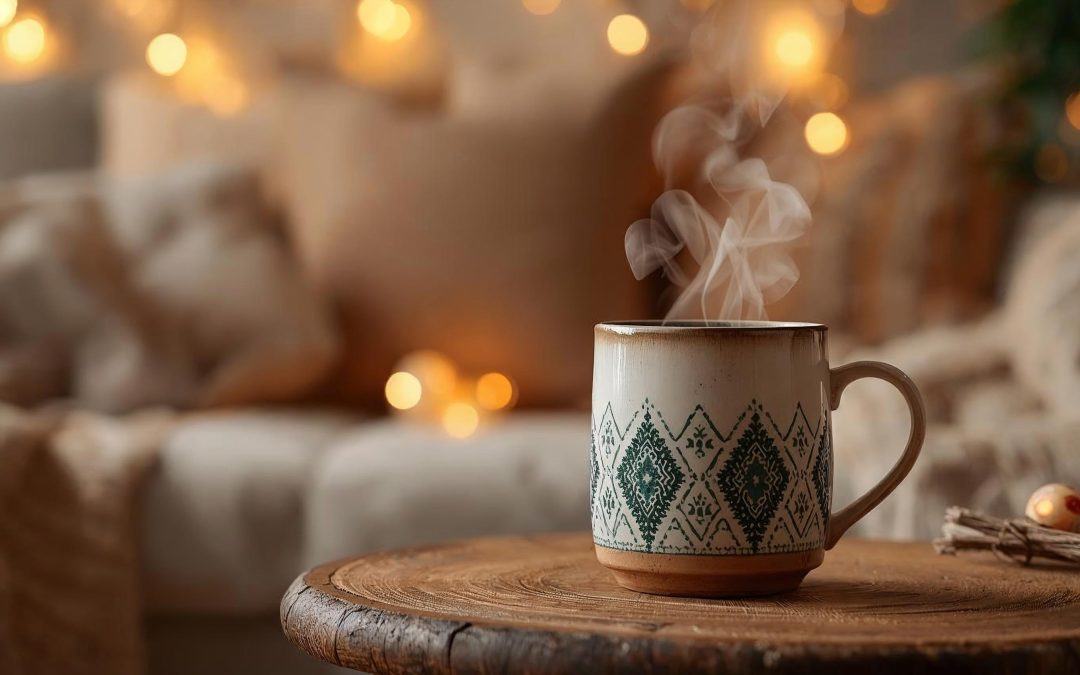
The same cup of tea each morning.
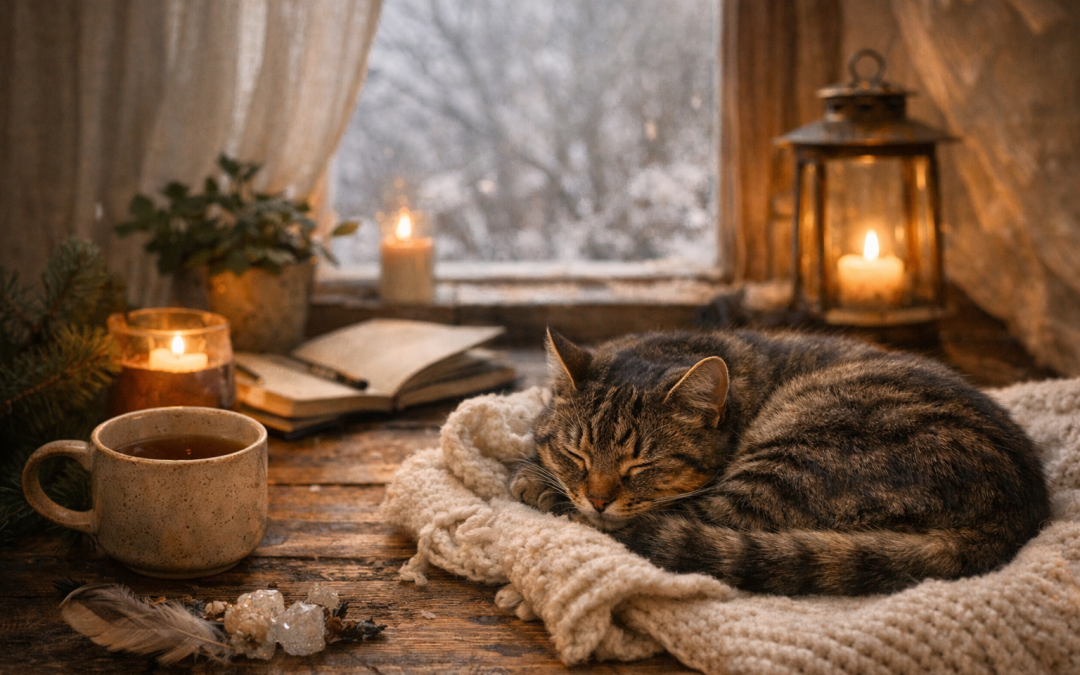
A candle lit at the end of the day, not to mark progress, but to mark presence.

The gesture is not about doing it “well.”
The gesture is about returning.

Each return tells the nervous system:
You are safe. You are not being rushed.

Meeting Resistance With Curiosity, Not Force

As habits begin to form, resistance often follows.
This is not failure — it is information.

Imbolc invites us to ask gentle questions instead of issuing demands:

  • Can I accept where I am right now?
  • Can I stay present even when something feels difficult?
  • Can I allow resistance to exist without needing to overcome it?

This echoes an earlier reflection on acceptance — the understanding that acceptance is not resignation, but relationship.
To accept is to remain in contact, not to give up.

Patience Grows From Safety

True patience cannot be forced.
It grows naturally when we feel safe enough to trust the process.

Survival mode is always result-oriented.
It wants completion, certainty, relief.

Imbolc offers another way:
to rest in the middle,
to soften urgency,
to let change unfold without pressure.

In the natural world, nothing is rushed at this time of year.
Seeds remain hidden. Sap rises quietly. Ice melts slowly.

Growth begins long before it can be seen.

A Loving Teacher, Not a Taskmaster

In many earth-based traditions, this gentle wisdom has long been held by feminine archetypes — by goddesses who teach through care rather than command.

Imbolc carries this maternal quality.
It does not demand transformation.
It creates the conditions for it.

Like a patient, attentive presence, it reminds us that consistency does not require force — only devotion.

Staying With the Flame

Imbolc does not ask us to do more.
It asks us to stay.

To tend what is small.
To return without judgment.
To trust that what is warming beneath the surface will emerge in its own time.

This is not a season of proof.
It is a season of care.

And sometimes, that is the bravest work of all.

Explore more soulful reads

More stories to nurture your spirit.

Imbolc Is Not Spring — It Is the Courage of Hope

Imbolc Is Not Spring — It Is the Courage of Hope

Imbolc Is Not Spring — It Is the Courage of Hope

In this Imbolc reflection, patience becomes an act of trust rather than waiting for certainty.

Imbolc arrives quietly.

There is still cold in the ground.
The days are longer, but winter has not released its grip.
Nothing is blooming yet — and still, something has shifted.

Imbolc is often misunderstood as the beginning of spring, but it is not.
It is not about results, growth, or visible change.

Imbolc is about hope before proof.
And that takes courage.

When Faith Is Needed Most

There are seasons in life when faith is not optional — because certainty is not yet available.

The outcome is still unknown.
The intention has been set, but the evidence has not arrived.
The path feels chosen, but untested.

This is when trust matters most.

Not the loud kind of faith that declares everything will be fine,
but the quiet kind that says: I will stay with this, even when I don’t yet know how it ends.

Imbolc teaches us that faith is not naïve optimism.
It is inner steadiness in the absence of reassurance.

Learning to Walk Without Forcing the Path

Survival mode is often project-oriented.

It wants timelines, milestones, and conclusions.
It asks, When will this be over?
It stays hyper-alert, scanning for danger, pushing for resolution.

That way of being once kept us safe — and we can honor that.

But Imbolc invites something different.

It asks us to loosen the grip of urgency.
To release the belief that everything must be managed, fixed, or completed as quickly as possible.

This is not passivity.
It is patience born from safety.

True patience only emerges when we begin to trust the process itself — when we no longer feel that pausing will cause everything to collapse.

The Wisdom of the Natural Cycle

Nature does not rush Imbolc.

Seeds remain hidden beneath frozen soil.
Sap begins to rise long before buds appear.
Life prepares itself quietly, without performance.

This is the loving lesson of the season:
nothing meaningful is forced.

In many earth-based traditions, this wisdom has long been held by feminine archetypes — by goddesses who embody care rather than command, rhythm rather than control.

They do not demand growth.
They create the conditions for it.

Imbolc carries the energy of the patient, nurturing mother — the one who tends the fire, warms what is fragile, and waits without anxiety for life to unfold in its own time.

This way of understanding life — as something that teaches through rhythm rather than force — is also present in many goddess traditions, where wisdom is offered through presence, not command.

When Letting Go of Control Becomes Trust

Trusting the Path Before the Proof

This season reminds us that there is no such thing as a purely good or purely bad phase in life.

There are only experiences — and our relationship to them.

When we learn to trust the direction we have chosen, even before it bears fruit, we begin to relate to life differently.
Not as something to conquer, but as something to learn from.

This shift does not come from effort.
It comes from softening.

If you wish to explore this theme more deeply, you may find resonance in the earlier reflection, When Letting Go of Control Becomes Trust, which speaks to the courage it takes to release the illusion of control and rest in something greater than fear.

Imbolc as a Gentle Teacher

Imbolc does not shout its lessons.

It teaches by example — by showing us how life prepares without rushing, how growth begins invisibly, and how care precedes change.

It reminds us that we are allowed to:

  • move slowly
  • trust without certainty
  • remain open even when nothing is guaranteed

This is not weakness.
This is wisdom.

Imbolc is not the answer.
It is the space where answers are kept warm until they are ready.

And that, too, is a form of love.

Explore more soulful reads

More stories to nurture your spirit.

Returning Gently: Coming back without leaving yourself behind

Returning Gently: Coming back without leaving yourself behind

Returning Gently

Coming back without leaving yourself behind

The holidays are over.
Workdays return.
The rhythm of everyday life slowly begins to reassemble itself.

For many, this moment feels abrupt — as if the softness of the season is suddenly replaced by routine. But there is something quietly valuable about these first days back.

They hold a rare kind of clarity.


From Reflection to Living Practice

During Yule, many of us reflected on what we were ready to release, and what we wished to carry forward. Those insights did not ask for immediate action. They asked for honesty.

Now comes a different phase — not planning, but living.
Not deciding, but noticing.

Before old routines fully settle back in, there is a brief window where we can observe ourselves in motion. Habits become visible not in theory, but in practice.

This is not a moment for pressure.
It is a moment for awareness.

The Value of This In-Between Space

Change rarely happens in a single decision.
It unfolds in small, often unnoticed moments.

In these early January days, we can see — with fresh eyes — where we tend to move automatically. We can notice the habits we wanted to leave behind, not as failures, but as patterns still finding their way.

This is the space where interruption becomes possible.
Not forcefully.
Gently.

A pause before slipping back into what no longer serves us.


Presence Before Perfection

Awareness is what supports this process.

Not strict discipline.
Not expectations.
Not self-correction through pressure.

But presence.

Journaling can be especially supportive here — not as a task, but as a place to witness ourselves without judgment. To write from curiosity rather than control.

What am I noticing right now?
Where do I pause naturally?
Where do old patterns still speak?

There is no right answer. Only information.

Learning Without Self-Punishment

This phase is not about getting it right.
It is about learning how change actually moves through us.

We will misstep.
We will forget.
We will repeat things we intended to release.

That does not undo the process — it is the process.

Self-love matters here more than determination.
Kindness steadies us more than discipline ever could.

Returning Without Abandoning Yourself

The return to daily life does not require leaving the quiet truths of the season behind.

We are allowed to bring softness into structure.
Presence into routine.
Curiosity into habit.

This moment — before everything feels “normal” again — is not something to rush through.

It is one of the most valuable spaces of the year.

Explore more soulful reads

More stories to nurture your spirit.

Gathering the Light: Resources for the New Cycle

Gathering the Light: Resources for the New Cycle

Gathering the Light

Recognizing the resources we already carry into the new cycle

As the year slowly comes to a close, the light continues to grow — quietly, steadily, without asking for attention.

This moment is not asking us to fix ourselves.
It is not asking for conclusions or resolutions.

Instead, it offers a gentler invitation:
to notice what has stayed.


What Remains Without Effort

Some things leave us easily.
Others fade when we stop holding them in place.

But there are also things that remain — not because we force them to, but because they belong to us.

Ways of being.
Sources of strength.
Practices and connections we return to again and again.

These are not achievements.
They are resources.

And they matter.


Why Resources Deserve Our Attention

Inner work often trains us to look closely at patterns, wounds, and limitations.
This awareness can be deeply valuable — but it is not the whole picture.

A process that only searches for what is wrong becomes exhausting.
A gaze that constantly magnifies pain forgets what supports.

True self-understanding also includes recognizing what helps.

The habits that steady us.
The relationships that hold us.
The inner capacities that allow us to move through difficult seasons without losing ourselves.

Resources are not rewards for healing well.
They are foundations we already stand on.


Inner and Outer Sources of Strength

Resources can live both within us and around us.

For some, they are found in the body — movement, yoga, walking, breathing, learning how to feel again.
For others, they appear in nature: trees, open paths, animals, weather, the rhythm of the seasons.

Relationships can be powerful resources too — a partner, trusted friends, honest conversations, shared silence.

Creative expression often holds deep support: journaling, writing, singing, making, allowing the voice to exist.

There is no universal list.
What matters is not how impressive a resource looks, but how reliably it supports you.


The Good That Also Deserves to Be Seen

Recognizing our resources is not denial.
It is not pretending that everything is fine.

It is balance.

We are allowed to acknowledge what works — not only what hurts.
We are allowed to name strength alongside vulnerability.

In fact, knowing our resources makes future inner work safer, clearer, and more grounded.

We do not step into a new cycle empty-handed.
We carry light with us — already gathered.


Resources Beyond the Personal

For some of us, strength is also found in something larger than ourselves.

In archetypal presence.
In ancestral memory.
In the quiet sense of being accompanied through moments of change.

The image of the inner wild woman.
The goddess at the threshold.
The one who walks beside us rather than above us.

These, too, can be resources — not as belief systems to follow, but as inner companions.
They do not remove uncertainty.
They offer orientation within it.

There is an old image that says the Goddesses once brushed the hair of women.
That they walked among us.

Perhaps they still do —
in moments of quiet care,
in signs that meet us when we are open enough to notice.

A heart-shaped leaf found without searching.
Light bending unexpectedly in winter fog.

Not instructions.
Not promises.

Just gentle reminders that we are not alone in this moment of becoming.


Gathering What Is Already Here

As the light continues to grow — slowly, almost imperceptibly — we don’t need to rush into certainty.

We can gather what is already present:

  • attention
  • steadiness
  • supportive relationships
  • embodied practices
  • inner figures that remind us of our strength

These are not small things.
They are what carry us forward.


Closing

Before intentions.
Before plans.
Before resolutions.

There is this moment.

A moment to recognize the light already held in our hands.

From here, the next cycle will unfold —
not from lack,
but from presence.

Explore more soulful reads

More stories to nurture your spirit.

Staying with the Moment after Yule

Staying with the Moment after Yule

Staying with the Moment after Yule

Growing light, gentle breath, open hands

There is a quiet quality to these days just after Yule.

The light has turned.
It is growing again — slowly, almost invisibly.
And yet, nothing asks us to rush.

This is a rare moment in the cycle, when we are allowed to stay exactly where we are.


Practicing the Present

Right now, the most meaningful practice is not planning or preparing.
It is simply being here.

This is the time to strengthen our ability to stay with the present moment — not perfectly, not for long stretches of time, but gently and often.

It can be as simple as holding a cup of hot tea.

Watching the steam rise.
Breathing slowly.
Noticing how the cold air enters through the nose, and how the warm breath leaves the body.

Nothing more is required.

This doesn’t need to last for hours.
It doesn’t need to become a ritual or a routine.
Sometimes one or two minutes are enough — whenever the moment allows.

This quiet attention is not a small thing.
It is the foundation beneath everything else.

There Is No Need to Hurry

In a world that constantly pushes us toward the next step, the next plan, the next goal, this time of year offers something different.

Here, we are invited to slow down before we move forward.

There will be time for intentions.
There will be time for direction.
There will be time for decisions.

But not yet.

For now, the growing light asks for presence, not action.

Choosing Openness Over Control

Instead of filling the coming year with detailed plans, this moment invites a different posture.

One of openness.
Of curiosity.
Of willingness to see what wants to arrive.

We don’t need to control every step or map out every hour.
We don’t need to know everything in advance.

We can meet the next cycle with open hands and an open heart — allowing the gifts, opportunities, and lessons to reveal themselves in their own time.

This kind of openness is not passive.
It is deeply attentive.
It listens before it decides.

Letting the Light Unfold Slowly

The light is growing now, but it is still tender.

Just like our intentions.
Just like our hopes.

There is no rush to define them.
No need to name everything yet.

We can allow what is here.
And we can allow what is coming.

Slowly.
Naturally.
As the light continues to return, day by day.

Closing

These days after Yule are not about beginnings in the loud sense of the word.

They are about staying.

Staying with the breath.
Staying with warmth.
Staying with what is already present.

From here, everything else will grow.

Explore more soulful reads

More stories to nurture your spirit.

What Is Yule? A Quiet Celebration of Returning Light

What Is Yule? A Quiet Celebration of Returning Light

What Is Yule?

A Quiet Celebration of Returning Light

A Quiet Celebration of Returning Light**

Yule marks the Winter Solstice — the longest night of the year, when darkness reaches its deepest point and quietly begins to turn.

It is not a loud celebration.
It does not arrive with fireworks or sudden brightness.
Yule comes softly, almost unnoticed, carrying a simple but powerful reminder:

The darkness is not the end of the story.

For centuries, people across Northern Europe paused at this moment of the year to honor the cycle itself — the rhythm of dark and light, rest and renewal, endings and beginnings. Yule was never about escaping the dark, but about trusting that light knows how to return.


What Do We Celebrate at Yule?

At its heart, Yule is a celebration of continuation.

After weeks of inward movement, release, and stillness, this is the moment when the wheel begins to turn again.

If you’d like to linger in that quiet threshold a little longer, you might enjoy reading The Pause Between Breaths, a short reflection on the stillness just before Yule.

The days are still cold. The nights are still long. And yet, something subtle shifts.

From this point on, the light grows — slowly, gently, almost imperceptibly.

Yule reminds us that hope does not arrive fully formed.
It begins as a whisper.
A seed beneath frozen ground.
A promise carried quietly through the dark.


The Yule Log – A Symbol of Warmth and Continuity

One of the most well-known Yule traditions is the Yule log.

Historically, families would bring a large log into the home and burn it throughout the longest night, keeping the fire alive as a symbol of warmth, protection, and life during the darkest time of the year.

Today, the Yule log has become more symbolic than literal.

It might appear as:

  • a small decorative log on a table,
  • candles arranged together,
  • a quiet focal point reminding us of inner warmth.

What matters is not the object itself, but what it represents:
the choice to keep something alive within us — even when the world feels cold or uncertain.


Yule as a Beginning, Not a Resolution

Yule is not about setting goals or making promises.

It is not about becoming brighter overnight.

Instead, it marks the beginning of a new cycle — one rooted in:

  • hope
  • faith
  • love
  • acceptance

The work that began in the darker months does not disappear.
It integrates.
It settles.
It becomes wisdom.

At Yule, we don’t rush forward.
We simply acknowledge that the path continues — and that we are allowed to walk it gently.


How Yule Can Be Honored Today (Without Pressure)

There is no “right” way to celebrate Yule.

For many, it might look like:

  • lighting a candle in the evening,
  • sharing a warm meal,
  • resting more than usual,
  • stepping outside to notice the quiet of winter,
  • holding one simple intention for what you wish to nurture in the coming cycle.

Yule does not ask us to do more.
It invites us to trust the slow return of light — within the world, and within ourselves.


Closing

Yule reminds us that even in the deepest dark, something is already shifting.

The night does not last forever.
The cycle continues.
And with patience, warmth, and care, light finds its way back — one quiet moment at a time.

Explore more soulful reads

More stories to nurture your spirit.

Pin It on Pinterest