Choosing the Path That Feels Like Mine

Choosing the Path That Feels Like Mine

Choosing the Path That Feels Like Mine

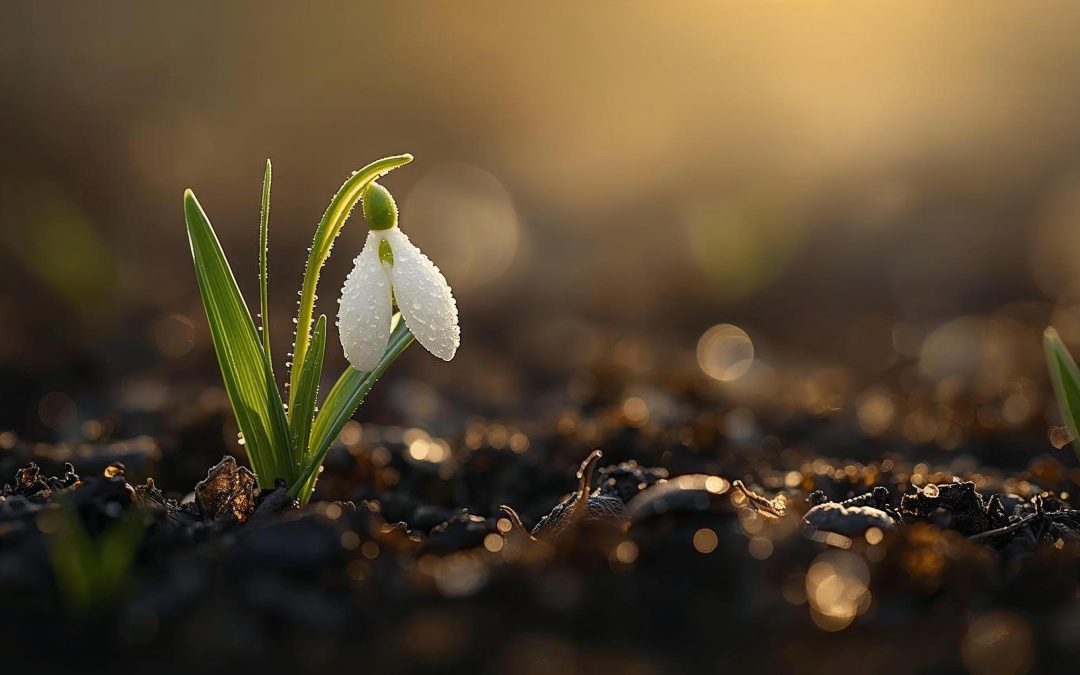
As the light continues to grow, something shifts quietly inside us.

Imbolc has passed.
The days are longer now.
Morning light lingers just a little more before leaving.

This is often the moment when goals begin to surface — not as loud resolutions, but as gentle questions:
What do I want to move toward?
What feels true for me now?

Yet this is also where many of us get lost.

We begin to shape our goals around what is expected.
Around what feels acceptable.
Around what others might approve of.

And slowly, almost without noticing, we stop listening to the heart.

Goals that come from the heart feel different

An authentic goal doesn’t shout.
It doesn’t demand immediate proof.
It doesn’t come with a clear, logical plan attached.

Instead, it carries a quiet sense of rightness.

You may not know how you will reach it.
You may not even know when.
But something in you recognizes the direction.

This is not weakness.
This is intuition.

Trusting it requires courage — especially if you were taught to value approval over inner truth.

letting go of control and learning to trust life

Trusting yourself before you trust the outcome

One of the hardest lessons on this path is learning to believe in yourself, not just in the result.

We often think confidence means seeing the whole road ahead.
In reality, confidence means trusting that you can meet what arises along the way.

That if learning is required, you can learn.
If obstacles appear, you can adapt.
If fear surfaces, you can tend to it with care.

You don’t need to know everything now.
You only need to know that you are capable of responding.

choosing gentle habits instead of self-pressure

Commitment as an act of self-respect

There is a profound difference between effort driven by pressure
and commitment rooted in love.

When we commit to our dreams because we believe we must prove something, exhaustion follows.

When we commit because we feel called — because this path matters to us — energy returns.

Choosing to invest in what truly matters to you is not selfish.
It is an act of self-respect.

It says:
I am worth listening to.
My inner life matters.
My dreams deserve care.

After Imbolc, we do not rush — we root

This season does not ask for speed.
It asks for honesty.

To notice what pulls you forward.
To gently release what was never yours to carry.
To choose presence over performance.

The light is growing — and so are you.
In ways that don’t need to be rushed, proven, or explained.

setting intentions that come from within

A closing mantra

You might wish to return to this during meditation or quiet moments:

I listen to what feels true.
I trust myself to learn what I need.
I commit to my path with patience and care.

Explore more soulful reads

More stories to nurture your spirit.

After the Work: Why Healing Needs Gentle Care Too

After the Work: Why Healing Needs Gentle Care Too

After the Work: Why Healing Needs Gentle Care Too

Holding ourselves after deep inner work

There is a quiet moment that often comes after the work is done.
After the therapy session.
After the deep conversation.
After the memory surfaces, the realization lands, the truth is spoken.

It’s the moment no one really prepares us for.

We expect clarity. Relief. Maybe even lightness.
Instead, what often arrives is fatigue. Fog. Tenderness. A strange sense of being emptied out.

And many people quietly ask themselves:

“What’s wrong with me? Shouldn’t I feel better by now?”

Nothing is wrong.

This is not failure.
This is integration.

Healing Doesn’t End When the Session Ends

Deep inner work doesn’t stop when the conversation is over.
It continues in the body. In the nervous system. In the places that have learned to stay alert for years.

When something long-held loosens, the system needs time to reorganize itself.
That reorganization can feel like:

  • exhaustion
  • emotional sensitivity
  • difficulty focusing
  • a desire for quiet or solitude
  • or even a sense of disorientation

These are not signs that you went “too far.”
They are signs that something meaningful has shifted.

The Forgotten Part of Healing: Aftercare

In many old traditions, healing was never a single act.

There was always a before — preparation.
And an after — rest, warmth, nourishment, containment.

Modern healing spaces often focus on insight, release, understanding.
But aftercare is where the work actually settles.

Aftercare is not indulgence.
It is not weakness.
It is wisdom.

The Witch Who Knows When to Rest

In old stories, the village healer didn’t rush back to work after tending the fire.
She knew when to cover the embers.
She knew when the body needed warmth more than answers.

This archetype still lives in us.

The part of you that knows:

  • when tea is better than talking
  • when silence is medicine
  • when doing less is the bravest choice

This is not avoidance.
This is self-attunement.

Gentle Ways to Care for Yourself After Inner Work

Aftercare doesn’t have to be elaborate.
It only needs to be intentional.

You might try:

  • a warm drink held slowly, with both hands
  • a quiet walk without headphones or goals
  • wrapping yourself in a blanket and letting the body soften
  • writing a few simple sentences: “This is how I feel right now.”
  • allowing yourself to do nothing — without justifying it

There is no correct ritual.
Only what helps you feel a little safer inside your own body.

You Don’t Have to Be Productive to Be Healing

We live in a world that measures worth by output.
But healing does not follow productivity rules.

Sometimes the most important work happens when nothing visible is being done.

When you rest after healing work, you are not stopping the process —
you are completing it.

A Gentle Reminder

If today feels quiet, slow, or heavy after deep inner work, let it be so.

You are not behind.
You are not broken.
You are listening.

And that is something to honor.


If your body has learned survival, rest can feel unfamiliar — even uncomfortable.
This is not something to fix, but something to meet gently.

You may return to this mantra whenever you need a reminder that being is already enough.

I am allowed to rest after healing.
Nothing is required of me right now.
What is changing inside me knows its own rhythm.
I am safe to soften.
I trust what is unfolding.

Explore more soulful reads

More stories to nurture your spirit.

Learning to Be Present When Stillness Feels Unsafe

Learning to Be Present When Stillness Feels Unsafe

Learning to Be Present When Stillness Feels Unsafe

There are days when nothing is asked of you.
No ritual to prepare.
No intention to set.
No next step waiting to be taken.

And yet, these are often the hardest days to inhabit.

We live in a world that quietly teaches us this equation:
movement equals worth.
Doing equals being enough.

So when there is no action to perform, no task to complete, no visible progress to show, something inside us begins to stir.
Rest can feel unfamiliar.
Presence can feel uncomfortable.
Stillness can feel like failure.

Not because we are doing it wrong —
but because many of us were never taught how to feel safe when nothing is required of us.

When presence feels harder than action

For nervous systems shaped by survival, calm is not neutral territory.

If your body learned early on that safety depended on alertness, adaptation, or pleasing others, then quiet moments can feel confusing — even threatening.
The absence of urgency may trigger questions like:

  • Why am I feeling uneasy when nothing is wrong?
  • Shouldn’t I be doing something right now?
  • What’s wrong with me if I can’t relax?

This is not a personal flaw.
It is not a lack of gratitude.
It is not a failure of spirituality.

It is a nervous system that learned to survive in motion.

When the world finally softens, the body may not immediately follow.

Rest is not inactivity — it is integration

After Imbolc, after the return of light has been felt, we enter a quieter threshold.
Not a time for pushing forward, but for letting the body catch up with what the heart has already sensed.

This is where presence becomes a practice — not a destination.

And presence does not mean perfect stillness.
It means gentle contact with where you are.

Sometimes that contact happens best through the body, not the mind.

Small ways to return to the present

If sitting quietly feels too much, that is okay.
Presence can be found in movement, texture, breath, and play.

You might try:

  • Walking in nature, without a goal. Let your attention rest on sounds, light, and ground beneath your feet.
  • Simple play — with an animal, a child, or even your own hands. Presence often returns through joy before calm.
  • Breathing with structure: slow inhales through the nose, longer exhales through the mouth, reminding the body it can soften gradually.
  • Touch-based grounding: holding a warm mug, a stone, a piece of fabric — something tangible to anchor you here.

None of these are meant to fix you.
They are invitations — ways of saying to the nervous system: You are allowed to be here.

When calm feels undeserved

One of the quiet wounds many carry is the belief that rest must be earned.

That if we are not producing, improving, or helping, we are somehow falling behind.

This is where the practice of allowing becomes essential —
the same allowing we explored earlier: letting ourselves be exactly as we are, without justification.

Presence is not a reward.
Rest is not a privilege.
Calm is not something you have to deserve.

Sometimes the most radical act is to stay with yourself when nothing is demanded.

A gentle reminder

If today feels empty, slow, or undefined, it does not mean you are lost.
It may mean you are integrating.

Nothing is asked of you — and that is not a void.
It is a pause.
A breath.
A place where something quiet can finally settle.

You do not need to fill it.


A small moment of grounding

Before you move on, you may wish to pause here.
This is not something to achieve or repeat perfectly.
Let these words land gently — during meditation, a quiet breath, or simply as you are.

I am allowed to be here.
Nothing is required of me in this moment.
My presence is enough.

Explore more soulful reads

More stories to nurture your spirit.

Imbolc — Tending the First Light

Imbolc — Tending the First Light

Imbolc — Tending the First Light

Imbolc arrives quietly.

Not with the certainty of spring,
not with visible results,
but with a subtle shift we can feel before we can explain it.

The days are still cold.
The earth still rests.
And yet — something inside us begins to stir.

This is the season of almost.
Almost ready.
Almost awake.
Almost brave enough to believe.

Imbolc in the Wheel of the Year

In the old seasonal rhythm, Imbolc marks the halfway point between the deep stillness of winter and the outward movement of spring.

It is not a time of arrival.
It is a time of tending.

The light has returned enough to be felt —
but not enough to be trusted blindly.

Imbolc lives in the in-between.
And so do we.

Brigid and the Gentle Fire

Imbolc is often associated with Brigid — goddess of healing, poetry, hearth, and sacred fire.

Not the fire that conquers or consumes,
but the fire that warms, protects, and keeps watch.

Brigid does not rush growth.
She teaches us how to stay close to what is alive,
even when it is still fragile.

This is not the fire of ambition.
It is the fire of care.

When Inner Movement Meets Doubt

As Imbolc approaches, many of us feel a familiar tension.

Inside, there is energy.
Ideas. Longings. A desire to move forward.

And yet — there is hesitation.

We want to see results before we commit fully.
We want proof before we invest our hearts.
So we move carefully, halfway, holding back.

Not because we lack discipline —
but because doubt learned how to keep us safe.

For many people, this hesitation is not laziness or fear of failure.
It is a survival strategy formed long ago:

If I don’t hope too much, it won’t hurt as much if it doesn’t work.

Imbolc gently exposes this pattern — not to shame it, but to soften it.

If you’d like to explore this season more deeply, I wrote earlier about Imbolc as the courage to hope — the moment before anything truly begins to bloom.


Releasing the Need for Control

Imbolc does not ask us to control the outcome.

It asks us to tend the process.

Seeds underground do not know how spring will arrive.
They respond to warmth, moisture, and time.

They do not rush because they trust the season to change.

In the same way, this moment in our lives does not require certainty.
It requires presence.

We are not asked to believe blindly.
Only to show up honestly.

If this tension between trust and doubt feels familiar, you might find resonance in this reflection on letting go of control:
When Letting Go of Control Becomes Trust

Simple Ways to Honor Imbolc

Imbolc does not need elaborate rituals.

Its magic lives in small gestures:

  • Lighting a candle with intention, not expectation
  • Opening a window to let fresh air in
  • Making a warm drink and drinking it slowly
  • Writing a single question in your journal:
    • What is already alive in me?
    • What am I gently tending right now?

These acts are not preparation for life.
They are life.

The Courage of Quiet Hope

Imbolc teaches us that hope does not shout.

It hums softly.
It flickers.
It waits.

And sometimes the bravest thing we can do is continue tending something we cannot yet prove will grow.

The light is not asking you to hurry.
It is asking you to stay.

A Mantra for Imbolc

You may return to this mantra during the day, or hold it gently during meditation:

I tend what is alive in me.
I do not need proof to care.
I trust the season to change.

Let it be a reminder that presence is already an act of faith.

Explore more soulful reads

More stories to nurture your spirit.

Being Present in Uncertain Times: Why Awareness Comes Before Answers

Being Present in Uncertain Times: Why Awareness Comes Before Answers

Being Present in Uncertain Times

Why Awareness Comes Before Answers

We live in a time that constantly demands answers from us.
Clear opinions. Immediate reactions. Strong positions. Plans for the future.

Yet many of us are standing in a place where clarity hasn’t arrived yet — and forcing it only creates more tension inside.

Uncertainty presses from the outside, but the deeper exhaustion often comes from within:
from trying to respond before we are ready,
from trying to know before we have listened.

Sometimes the most supportive thing we can do — for ourselves and for the world — is not to hurry toward solutions, but to be fully present with what is.

The Witch’s Role in Times of Uncertainty

Historically, witches were not figures of control or prediction.
They did not promise certainty.

They were witnesses.
Listeners.
Midwives of transition.

They helped communities sit with illness, grief, birth, death, and change — moments when answers were unavailable, but presence was essential.

In uncertain times, the witch does not rush ahead.
She stays close.
She keeps the fire steady.
She reminds us that not knowing is not failure — it is a phase.

This is the role many of us are called into now.

Awareness Before Action

When the world feels unstable, our nervous system often wants immediate structure:
plans, routines, goals, productivity.

But healing rarely begins with planning.
It begins with awareness.

Before we ask:

What should I do next?

We might gently ask:

How am I actually living right now?

Not to judge.
Not to fix.
Only to notice.

Because we cannot create supportive routines until we understand the rhythms we already inhabit.

Turning Inward Instead of Outward

Many of us have been trained to orient ourselves outward:
toward expectations, crises, responsibilities, and demands.

Yet healing asks for something different.

It asks:

  • Can I be important enough to myself to listen inward?
  • Can I notice my needs without immediately overriding them?
  • Can I stay with my experience instead of escaping into solutions?

Practices like gentle yoga, breathwork, meditation, and journaling do not solve uncertainty —
They create safety inside it.

And safety is what allows clarity to emerge naturally.

A Simple Daily Practice of Presence

Rather than planning the week ahead, we can begin with a much smaller gesture.

At the end of each day, you might sit with a few quiet questions:

  • What felt supportive today, even in small ways?
  • What did I manage to do, despite everything?
  • Where did I feel a little more at ease?
  • What felt draining or heavy?
  • What might I need more of tomorrow?

These questions are not evaluations.
They are invitations.

Over time, they reveal patterns — not as rules, but as understanding.

Preparing the Ground for Gentle Structure

Eventually, routines and weekly rhythms can grow from this awareness.

But they are not imposed — they are grown.

When we listen long enough, we begin to notice:

  • when our energy rises and falls,
  • what stabilizes us,
  • what overwhelms us,
  • what truly nourishes us.

From there, structure becomes care — not control.

Staying With Yourself

In uncertain times, being present with yourself is not withdrawal from the world.
It is preparation.

A regulated nervous system, a compassionate inner dialogue, and an honest relationship with your own rhythms are quiet acts of resistance against chaos.

You do not need all the answers right now.

You need to be here.
With yourself.
One day at a time.

And that is already enough.

Explore more soulful reads

More stories to nurture your spirit.

Pin It on Pinterest